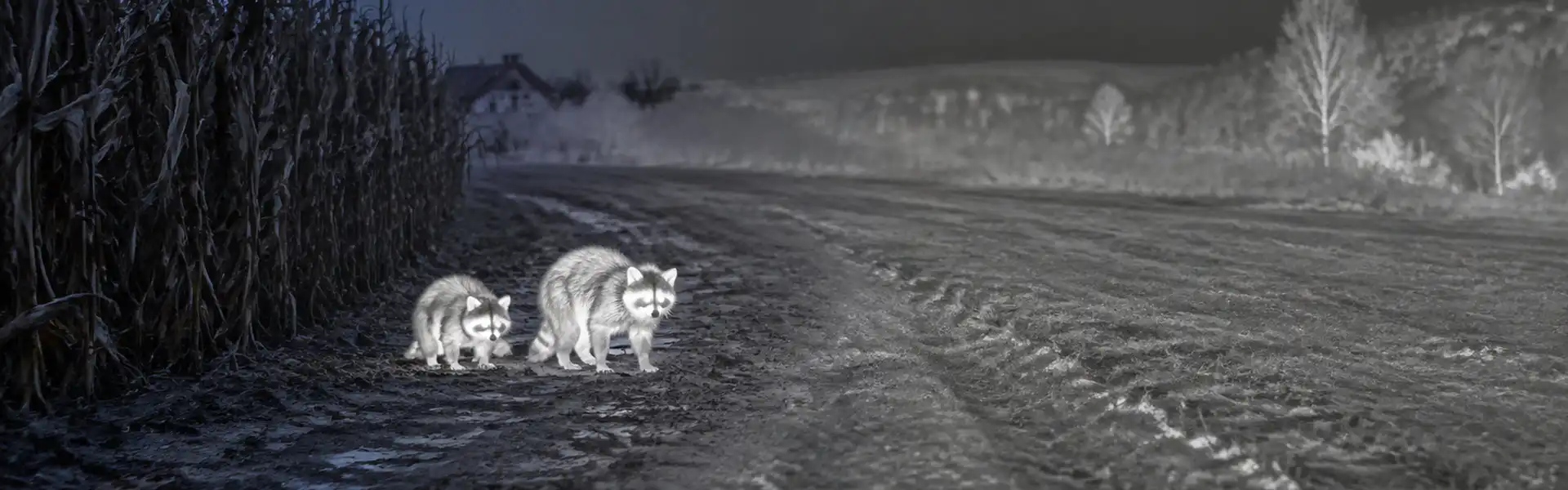
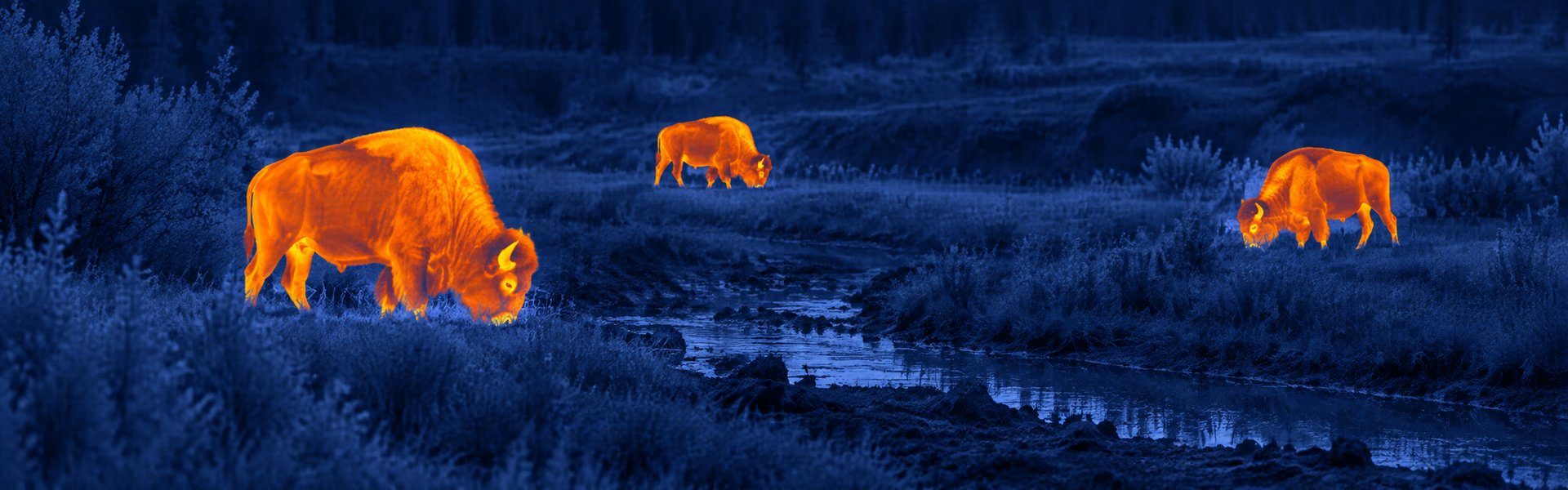
Night thermal goggles can help locate an exposed heat pattern from a stationary viewpoint after an unusual animal sound. They cannot identify the sound source through a wall or dense cover. Compare native detail, fitted eye position and repeatable alignment before assuming that extra processing or a second viewer solves the problem.
Night Thermal Goggles Cannot Identify a Sound by Themselves
A farm worker hearing movement outside a building may want a quick visual check. Begin at a known safe observation point and examine only the area you can legitimately see. The animal may have moved or remained concealed. thermal checks in outdoor surroundings should preserve that uncertainty rather than connect every noise to the first bright shape.
If hands-free viewing is genuinely useful, define why: repeated stationary checks or the need to take notes. goggle buyer-fit questions should identify that benefit before a purchase. Thermal viewing is not a navigation aid and should not replace normal awareness of the setting.
Compare Native Detail Instead of the Largest Number
The useful image comes from the detector, lens, focus and processing together. Keep native array, enhanced output, screen dimensions and file size in different fields. the infrared basis of thermal imaging helps explain what is detected, but it does not establish the performance of a particular marketed configuration.
Check compact thermal viewer specification priorities for the exact unit. thermal goggle quality comparisons should not combine one variant’s sensor with another variant’s lens. A processor claim may describe response or presentation without adding real samples across the animal. Missing details should stay unresolved until confirmed.
Repeatable Fit Matters to Repeated Checks
Set the support before aligning the eyepiece and try the winter hat or padding used outside. Removing and refitting the viewer can shift its position. Test a stationary reference after each refit instead of assuming a locking interface preserves every adjustment. goggle usability in a complete kit includes this ordinary handling sequence.
The optical field and apparent display scale also affect comfort. focal length and field coverage is useful background when evaluating the view, not a guarantee of a natural-looking eyepiece. thermal goggle live-response considerations needs direct observation, particularly when the subject is discovered after a brief turn.
Physical Movement and Processing Artifacts Need Different Remedies
If the image shifts, check whether the housing moves relative to its support. Then compare a stable stationary view. Loose hardware should follow an approved adjustment procedure, while a correction cycle or image-processing change requires different investigation. Do not tighten everything indiscriminately or add unapproved extensions.
Compare combined thermal viewing setups if a second device contributes to the mismatch. simpler observation alternatives may eliminate variables for a task requiring only intermittent checks. Two viewers add batteries and independent calibration behavior; a bridge alone does not synchronize their images.
| Question |
What to examine |
Decision |
| Heard but unseen animal |
Legitimate clear viewpoint |
Do not infer identity from sound alone |
| View changes after refitting |
Support and optical alignment |
Check repeatability on a stationary reference |
| Apparent image shake |
Housing movement versus processing |
Describe the specific cause before adjusting |
| Repeated brief checks |
Standby and power behavior |
Verify the actual evening workflow |
Confirm the Animal Only When Features Support It
A moving outline may stand out better than a stationary one, but movement is not an identity test. Ground, livestock and reflective surfaces can complicate interpretation. Keep a short original recording with the viewing position and conditions if the function is supported. A dark screen or a missing overlay also needs a channel-specific description.
The separate discovery approach in handheld wildlife observation remains a useful comparison. thermal and visible context together can supply different evidence without making every event certain. Note which features you could see and which were absent instead of assigning a species because it would explain the sound.
Choose a Setup You Can Recheck Easily
Before buying, demonstrate fitting, standby, recording and storage in the actual supported assembly. Display blanking may leave the sensor active, so confirm whether the routine conserves enough power for repeated evenings. Inspect the lens even when it normally stays mounted. Dust and obstruction can be overlooked during brief checks.
Use thermal optics ownership questions to clarify service and accessory compatibility. Review the thermal optics collection against your defined stationary task. Better native detail may help a clearly exposed small subject, but it will not repair poor mounting repeatability or reveal an animal behind a closed structure.
Treat the image as evidence of what was exposed, not an explanation for every night-time sound. Choose repeatable fit and confirmed native specifications for the practical task. A short uncertain observation is more trustworthy than a confident identification without visible support.