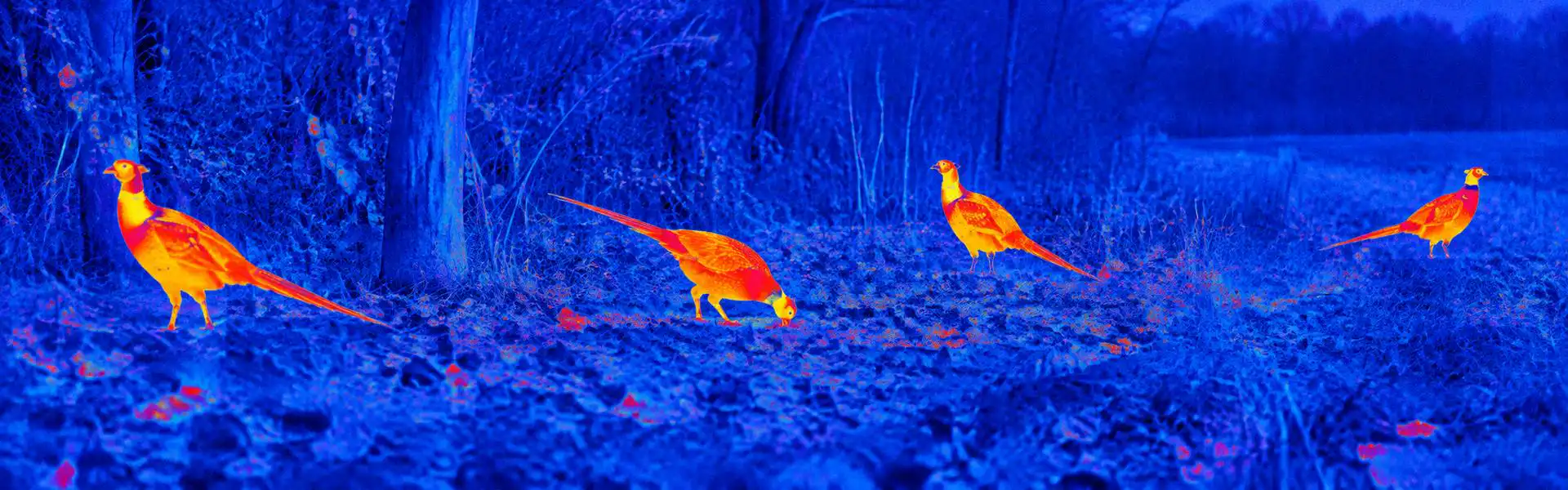
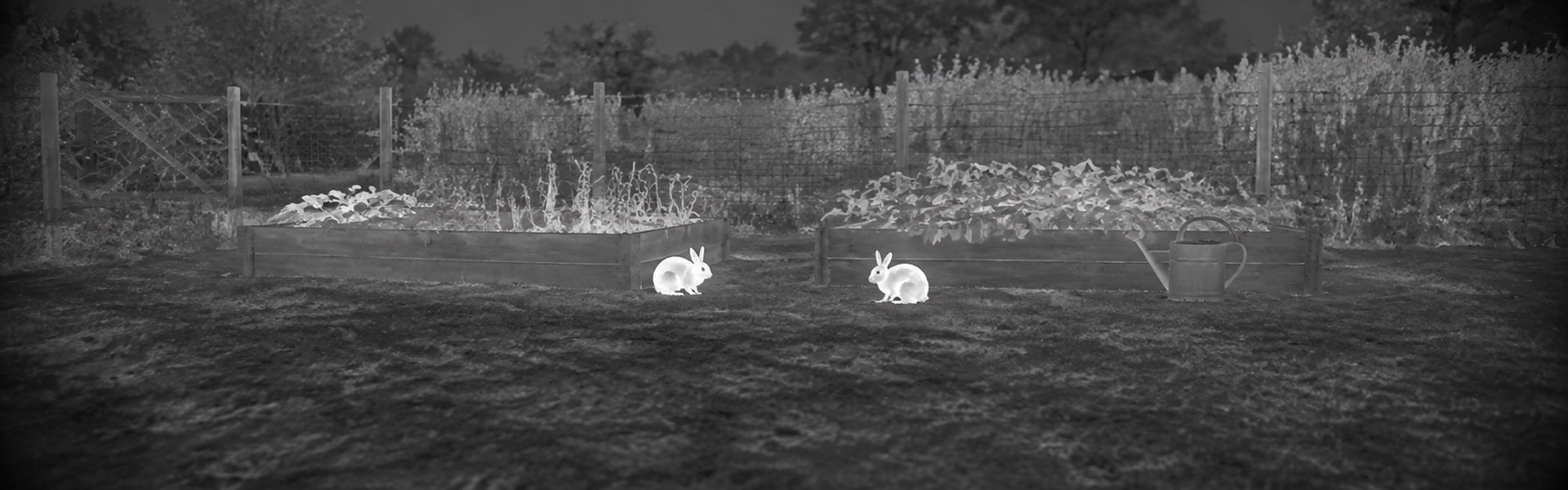
Monocular thermal imaging terms are useful when they explain your actual observation: what is exposed, how much scene fits and what detail is recorded. For a poultry-house exterior, separate detection from recognition and native resolution from output dimensions. Solid walls and roofing remain barriers to ordinary thermal viewing.
Monocular Thermal Imaging Starts With the Visible Area
A guide accompanying farm visitors might observe outside a poultry house, but the task must respect access and animal welfare. List the open doorway, external yard and fence gaps that are legitimately visible. monocular choices for farm observation should not be interpreted as seeing through an enclosed building.
The word detection means noticing a relevant thermal pattern; recognition requires enough useful shape to describe it more specifically. matching a monocular to the observation task helps separate those goals. A maximum distance number without a target, conditions and criterion does not tell you whether a nearby animal can be identified among several overlapping shapes.
Native, Enhanced and Recorded Are Different Resolutions
Native thermal resolution describes the detector array. Enhanced output may process that data into a larger image. Screen pixels and photo or video dimensions then describe further presentation. understanding monocular specification tradeoffs means listing all of these independently rather than borrowing the biggest number.
infrared radiation background explains the signal category, not the quality of a particular file. A high-resolution export cannot reconstruct anatomy that was not sampled. what an affordable monocular can realistically show should be assessed using an original scene at your distance, not a comparison image assembled from different device variants.
| Question |
What to examine |
Decision |
| Native resolution |
Detector array |
Do not substitute screen or file dimensions |
| Detection range |
Target, conditions and criterion |
Separate noticing from recognizing |
| Close focus |
Nearest usable subject distance |
Test the real confined yard |
| Recording |
Original export and actual framing |
Do not assume unattended monitoring |
Field of View and Close Focus Are Everyday Terms
Field of view is the scene area visible through the optical system, while minimum focus distance concerns how close a subject can be brought into focus. A long lens chosen for distant detail may be inconvenient in a confined yard. focal length and coverage geometry provides useful background for that tradeoff.
Check wildlife monocular field coverage at both the doorway and the far yard boundary. first-viewer close-range priorities also applies to feeder observations. Enlarging an out-of-focus nearby bird does not fix an unsuitable minimum focus distance. Keep the search width and useful subject detail in separate notes.
A Zoom Ring Changes the Workflow, Not the Sensor
A dedicated control can make reframing easier without entering a menu. Try it with your glove and normal grip, checking whether you accidentally activate it while carrying the viewer. A shaped handgrip may help balance, while a tubular body may store more easily. Neither style can be chosen confidently from its appearance alone.
Include practical budget monocular handling checks and thermal optics accessory planning in a short demonstration. A strap, case or support interface may matter more to a guide who repeatedly puts the device down for notes. Confirm accessory compatibility individually; batteries or adapters from an older viewer may not transfer.
Recording Is Not Unattended Monitoring
A handheld viewer records the scene the operator frames. It is not automatically an overnight trail camera or a remotely monitored installation. Test the actual recording sequence and original file export before an organized visit. Keep time and location notes alongside footage, and distinguish heat discovery from visible identification.
Use thermal discovery in outdoor spaces to frame a repeatable observation. visible context alongside thermal imaging may help distinguish an animal from a background pattern. A warm wall fills many more pixels than a small animal, so it is a poor substitute for a representative demonstration of recognition.
Terms Should Produce Clear Purchasing Questions
Ask for the exact native array, lens and field of view, then the separate display and export details. Treat NETD as an imaging sensitivity concept under stated test conditions, not temperature accuracy. Viewing optics may have no calibrated measurement function at all. Unpublished sensor, firmware and certification information must remain unassigned.
Consider two-eye viewing for longer farm sessions if comfortable group observation is the priority. Review the thermal optics collection with terms translated into practical questions: can I find the exposed subject, hold the frame and retain useful evidence? That is more productive than choosing the longest specification line.
Use the terms to ask for comparable facts about the exact unit and your visible observation area. Keep measurement, recording and viewing claims separate. When a specification does not explain what it changes in the task, request clarification instead of turning it into a promise.