Best Thermal Monoculars Should Match the Shoreline You Watch
A farm owner observing the bank from a stationary boat may alternate between nearby reeds and a farther grazing area. That is not the same task as looking at one distant target from firm ground. Compare matching a thermal monocular to an observation task with the closest useful distance and the widest bank section you want to cover.
Boat movement, even while stopped, can make a narrow view hard to hold. wildlife monocular field coverage should be assessed from a representative stable position, not inferred from a seller’s tripod clip. This is stationary wildlife observation only; the viewer is not a means of operating or navigating a boat. Ordinary visibility and responsible access remain separate requirements.
The best thermal monoculars for stationary shore watching balance a steady view, manageable near-to-far coverage and usable file export. Choose a permitted, stationary observation position, then judge the actual bird or mammal outline rather than the brightness of water. Wireless sharing is useful only if the exact device and phone workflow are confirmed.
Keep Water Reflections Out of the Identification Decision
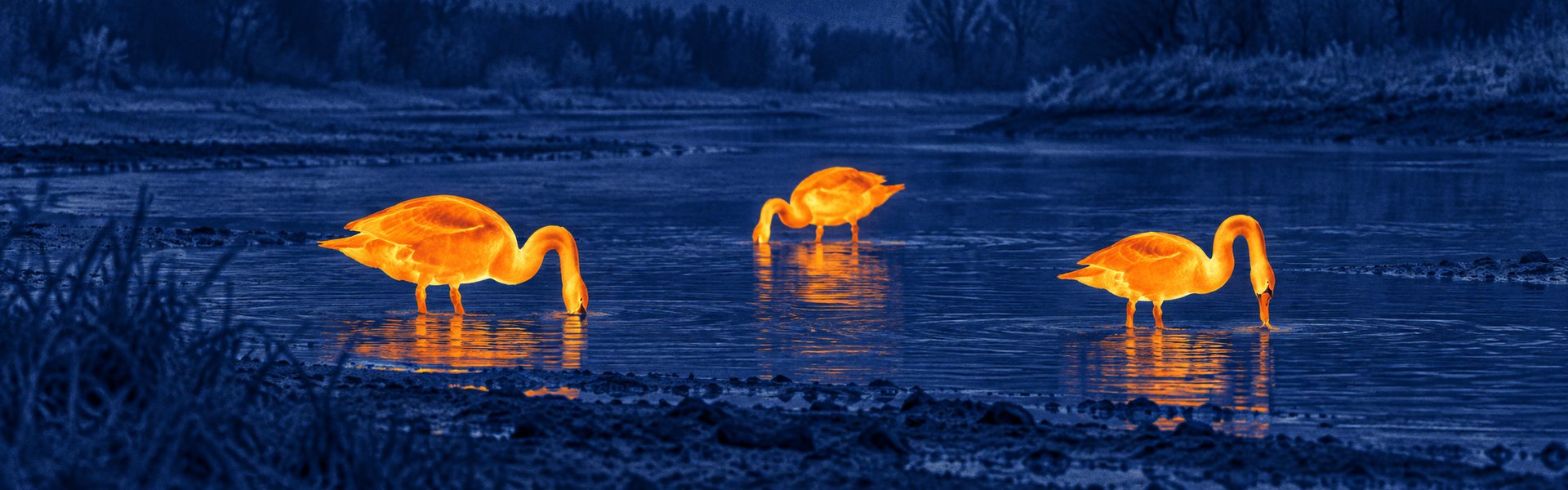
A bright or dark patch beside water may be influenced by reflection, surface temperature and viewing angle. It does not automatically mark an animal. infrared radiation and thermal imaging explain the signal type, while a careful observer still needs to follow the outline and context of the suspected subject.
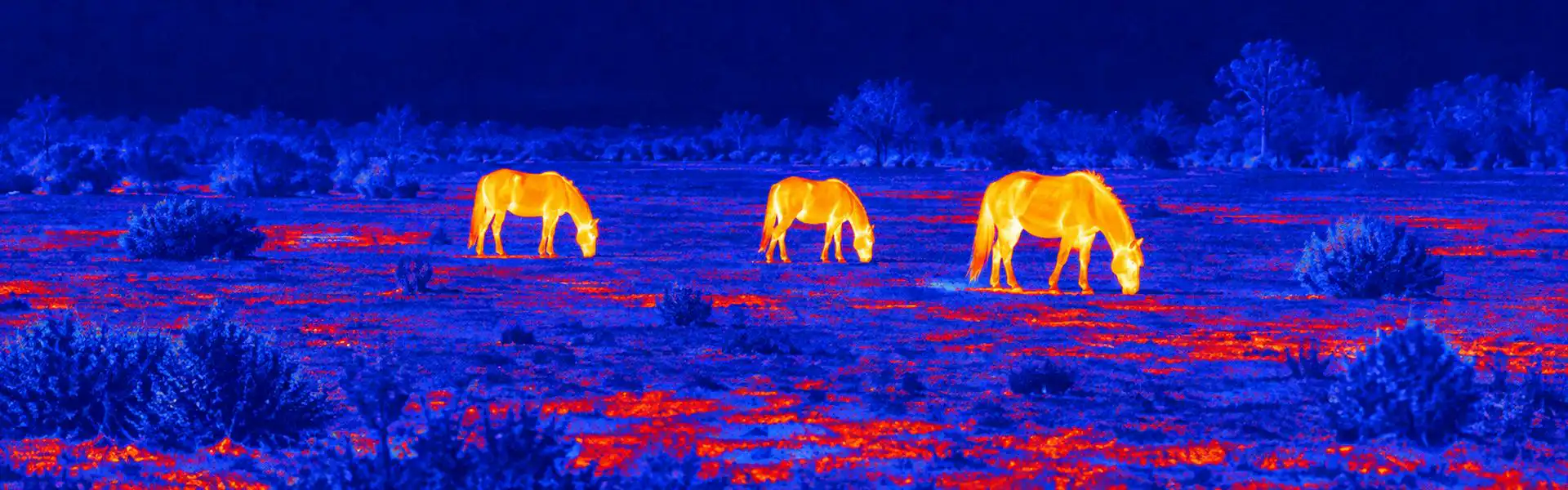
Use thermal contrast across outdoor backgrounds to think about the difference between an exposed animal, wet vegetation and the water surface. A bird partly concealed in reeds may produce only a small fragment. interpreting heat contrast responsibly means retaining an uncertain label when head, body or movement cannot be resolved. Avoid moving closer simply to turn an ambiguous image into an attractive clip.
Test Recording Without Changing Your Grip
Try focusing, starting a clip and stopping it while maintaining the viewing position. If the record button forces you to rotate the device, the beginning of each recording may be a blurred sweep. first-time monocular handling checks are useful even for an experienced photographer who has not operated thermal controls before.
A neck strap, approved support or well-fitted grip can improve repeatability, but none creates more native image detail. portable monocular feature tradeoffs should include the weight and shape with its real battery installed. Test the duration you normally watch between pauses. A short demonstration of a light device can conceal an awkward sustained grip or a focus ring that is difficult to reach.
Compare the Original Clip With the Phone Copy
Ask for a thermal recording exported from the unit, then compare it with the version transferred or streamed to a phone. Saved dimensions, stream resolution and app previews may differ. what an affordable thermal monocular can record should be judged through the actual workflow rather than a screenshot of a sharp menu.
For budget recording and sharing priorities, establish whether a local transfer is supported and whether an app is required. Do not assume a particular operating system or offline function until documented. Large screen pixels and enhanced output remain separate from native thermal resolution. Wireless convenience is a benefit when it helps keep the original observation; it is not evidence of a higher-resolution detector.
| Question |
What to examine |
Decision |
| Near reeds |
Minimum usable focus and width |
Preserve context around the subject |
| Stationary boat |
Real hand comfort and motion |
Do not extrapolate from tripod footage |
| Recording |
Original thermal file versus phone preview |
Confirm export before ordering |
| Damp transport |
Protection conditions and dry storage |
Avoid undocumented immersion claims |
Use a Lens That Lets You Reacquire the Subject
Shoreline subjects disappear behind reeds and reappear at a different opening. Excessive base magnification can make returning to them slow. the relationship between focal length and field coverage helps explain the tradeoff: concentrating the view on a far subject reduces the surrounding area visible at once.
Consider monocular features for rural observation alongside the bank width and animal size. Begin wide enough to find the relevant opening, then enlarge the image only as necessary. using thermal and visible views together may be helpful when bird shape is unclear. A palette cannot reveal plumage color, and digital zoom does not add samples that were absent from the original thermal view.
Plan the Evening Before Paying for Extra Features
Write down a simple sequence: carry the kit, settle at the permitted position, record several observations, export one file and pack away. Include damp transport and the expected time away from charging. A moisture-protection claim must be read with its closure and use conditions; it is not permission to immerse the viewer.
Compare stationary binocular alternatives if long viewing comfort outweighs compact carrying. Review thermal optics options for wildlife watching only after deciding whether wireless sharing solves a real need. Request exact file and battery information in writing. Choosing fewer well-supported functions can be more practical than buying a complex system whose recording behavior you cannot verify.
Choose for the view and files you will actually use. Confirm near-focus behavior, sustained handling and the original export path. Keep water-edge uncertainty explicit and use visible confirmation when a thermal outline is not enough.