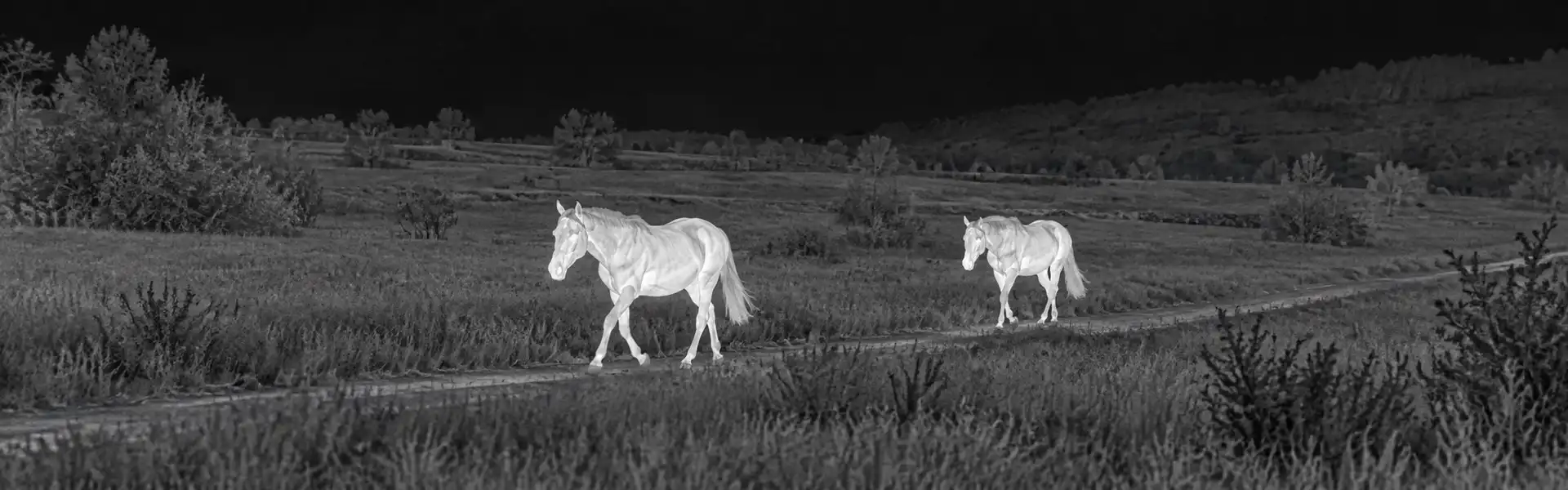
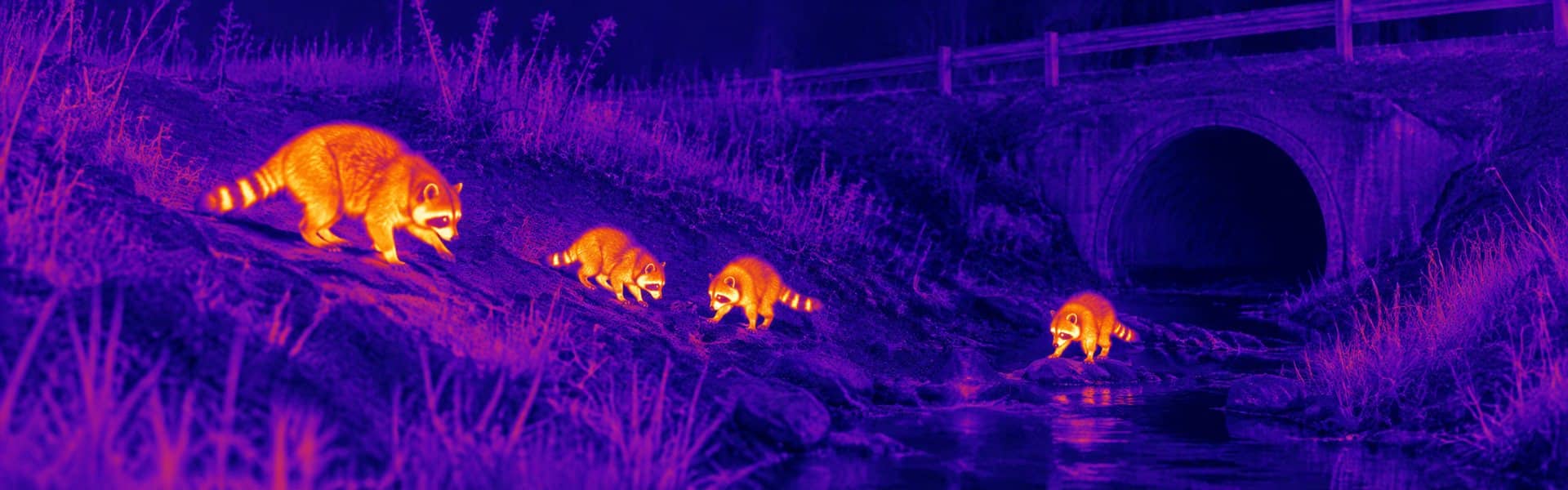
A disappointing thermal optics hunting image can result from focus, concealment, weak contrast, optical obstruction or unsuitable magnification rather than a defective detector. Diagnose these variables from a safe fixed observation point and retain the original recording. This guide concerns wildlife viewing only and does not provide weapon-use guidance.
Thermal Optics Hunting: Start With the Observable Symptom
A garden or field-edge recording may show a bright patch but no useful outline, or a clear animal that disappears when you change position. Write the symptom precisely before changing every setting. thermal viewing in open-field conditions benefits from knowing which part of the observation failed: discovery, recognition, recording or continuity.
Recheck a familiar exposed subject at a modest known distance. If it looks normal, a distant obscured animal is not a comparable test. realistic animal-observation expectations helps keep that distinction clear. A blurred thermal shape cannot support a confident identity merely because its location or timing fits your expectation.
Separate Obstruction From Low Contrast
A solid barrier blocks the useful direct view, while weak contrast makes an exposed subject harder to separate from its surroundings. Both can look like poor detail, but they need different interpretations. infrared radiation fundamentals should not be stretched into a claim that a viewer sees through walls or all vegetation.
Compare monocular line-of-sight wildlife scanning from another legitimate viewpoint where possible. farm-edge observation priorities include gaps, sheltered spaces and overlapping bodies. Record what is actually exposed. Better processing may emphasize a patch, but it cannot prove the identity of the parts that remain hidden.
| Question |
What to examine |
Decision |
| Uniform patch |
Cover, focus and thermal contrast |
Compare an exposed familiar subject |
| Only distant subject disappoints |
Target sampling and concealment |
Reassess recognition expectations |
| Artifact changes with viewpoint |
Reflection and scene context |
Do not label the patch as an animal |
| Session ends early |
Charge, temperature and active functions |
Compare like operating conditions |
Check Optics Before Chasing Processing Settings
Confirm that the lens is uncovered and clean using the supported method, set the eyepiece correctly and focus the scene. Then return to native view. Digital zoom enlarges artifacts and shake. thermal optical specification tradeoffs includes lens properties and field coverage as well as the detector.
focal length and field-of-view principles explains why a longer lens changes the frame, not simply the headline range. Use beginner monocular setup checks to eliminate obvious handling variables. Do not infer sensor failure from a scene that is out of focus, partly covered or viewed at extreme enlargement.
Reflections and Background History Can Mislead
A shiny surface can reflect radiation from elsewhere. Ground that stored daytime heat can also change the apparent contrast after dark. Note the surface and compare the pattern from a cautious different angle. A moving bright patch is not necessarily an animal if its behavior follows the viewpoint.
The mixed-channel approach in thermal discovery with visible context can clarify surroundings without proving what thermal alone cannot. Use property observation with two-eye equipment if long viewing is comfortable, but keep the same uncertainty rules. Never treat a viewing optic’s palette as a calibrated temperature scale unless a proper measurement function is documented.
Battery Endurance Is a Condition, Not a Fixed Promise
Record the charge state, ambient conditions and whether recording, sharing or external output was active. A session that differs from the stated test can end earlier without establishing a fault. Check supported battery type and the difference between display blanking, standby and power-off. Do not experiment with unapproved extensions to force longer operation.
Include budget scanner power considerations in your notes. thermal optics ownership checks should also separate detector, display, battery and accessory coverage. Written component-specific service terms are more useful than assuming one warranty period applies to every source of an image problem.
Escalate a Specific Reproducible Problem
Keep an original clip and note whether the artifact appears in live viewing, recordings or both. Include mode, focus, calibration behavior and the exact unit variant. If specifications disagree across the title and manual, ask for clarification; do not merge the strongest values into a fictional device.
Review questions about binocular and thermal system evidence for a more precise support request. Compare thermal optics alternatives only after you can name the limitation. A replacement may improve useful detail or handling, but it should not be proposed as a cure for blocked sightlines, reflection or undocumented expectations.
Diagnose one variable at a time, starting with a clear familiar scene and the supported setup. Preserve enough evidence for a precise support discussion. When contrast or concealment is the limiting factor, record the uncertainty instead of inventing a defect or a guaranteed upgrade.