Thermal Goggles Need a Defined Teaching Position
An outdoor club can use a fixed viewpoint to show how exposed animals differ from the background. Establish legitimate access and clear surroundings before passing equipment between participants. thermal goggle preparation questions should focus on the simple viewing task rather than a complicated multi-device demonstration.
Begin with one channel and a familiar stationary reference. goggle response and motion checks can then be assessed with gentle turns while remaining stationary. Do not interpret a successful view as permission to move through the landscape using the display. The equipment teaches observation, not safe navigation.
Introduce thermal goggles through a stationary sequence: verify the supported assembly, fit the view, inspect a familiar scene and explain detection limits before adding recording or another channel. A bridge is not proof of synchronized fusion. Stop if the view is uncomfortable, and do not use the session as a navigation demonstration.
First Verify the Whole Assembly
Confirm the approved interfaces, support load, battery arrangement and clearance. Similar-looking rails or housings may not be compatible. Inspect normal control and compartment access before fitting the viewer. compact goggle compatibility priorities includes these mechanical details, not just image resolution.
Check complete-kit goggle usability with power off while exploring the mount’s movement. A cable should not pull at a connector or cross an adjustment joint. A secure initial attachment cannot establish long-term alignment or an approved load. Leave unsupported combinations out of the teaching session.
Next Fit the View Without Forcing Image Fusion
Set support fit before height, side position and tilt. The display should be complete and comfortably placed, including for the glasses you wear. Nominal minimum zoom does not necessarily match the scale of the unaided scene. focal length and field-of-view background explains coverage, while display and eyepiece geometry add further variables.
For mixed thermal viewing arrangements, shifting an image can change position without matching timing or magnification. simple thermal viewing alternatives can avoid that complexity. Single-channel use is reasonable; a bridged system does not require the observer to combine both images continuously.
Then Show What Thermal Discovery Means
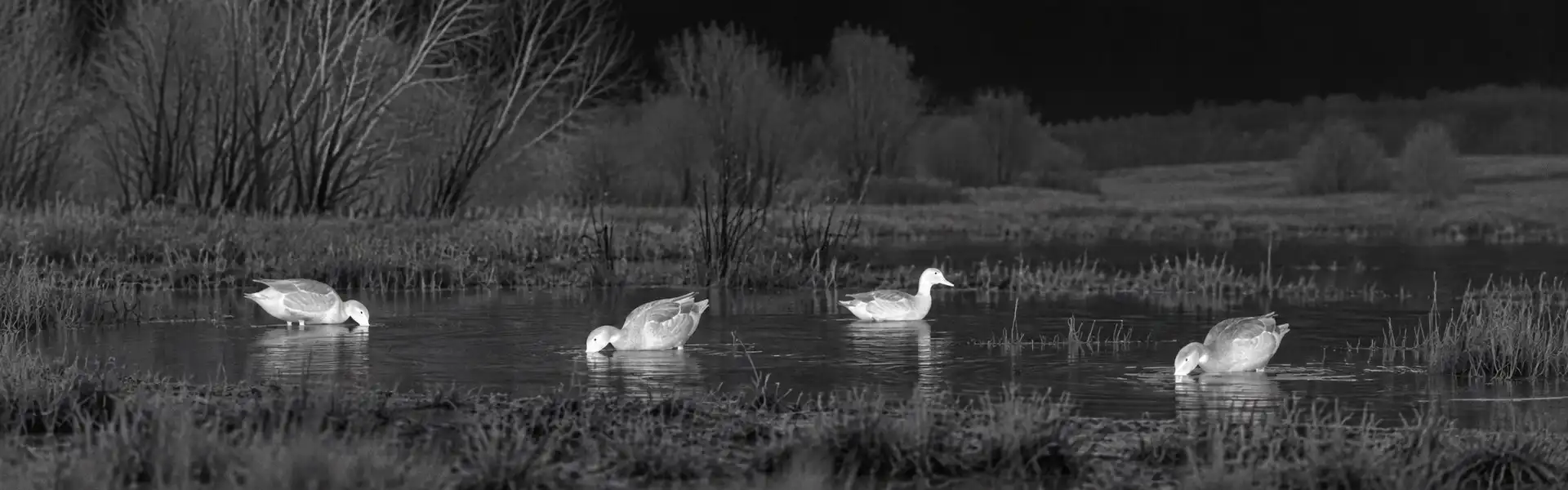
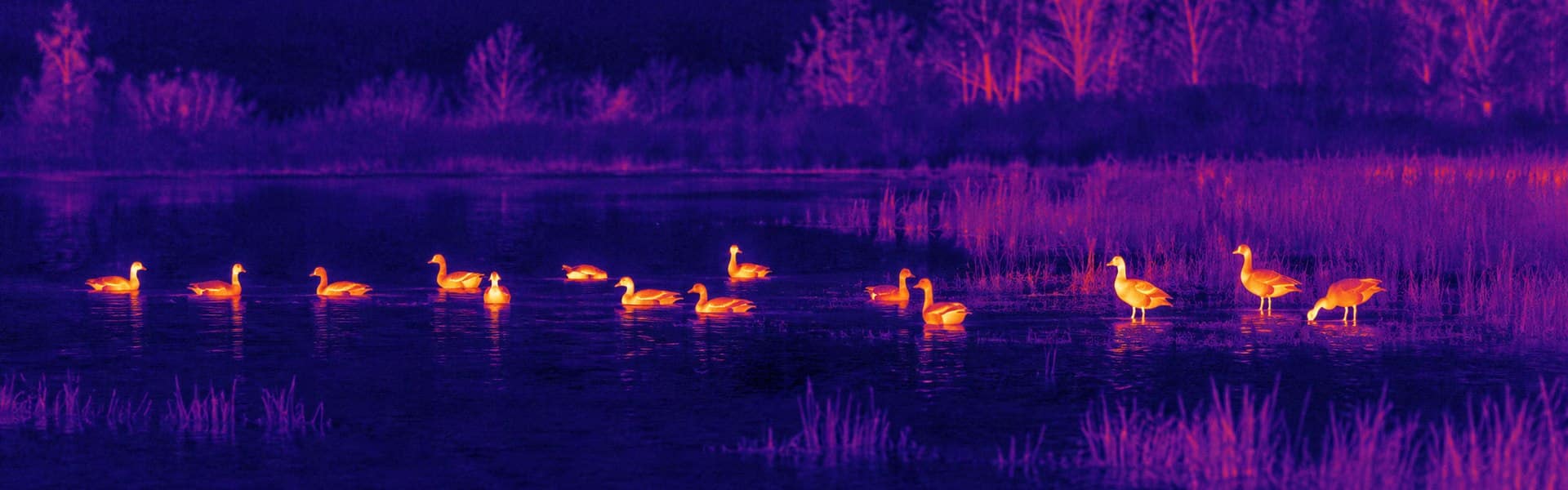
Use an exposed subject and maintain native view before demonstrating enlargement. infrared imaging background provides the physical context. Thermal contrast can help locate a heat pattern, but solid cover and unresolved small details still limit interpretation. Explain why a colorful image is not necessarily a calibrated temperature map.
Compare outdoor thermal discovery with scene context rather than promising every animal can be identified. handheld monocular observation is a useful alternative demonstration of the same principle. Neither form creates information about body parts concealed by vegetation. An honest session can end with an uncertain but well-described observation.
| Question |
What to examine |
Decision |
| Confirm |
Approved complete assembly and clear controls |
Exclude unverified combinations |
| Fit |
Stable support and comfortable full view |
Do not force mixed-image fusion |
| Observe |
Native view of an exposed subject |
Separate heat discovery from identity |
| Record |
Original clip and scene notes |
Preserve evidence and uncertainty |
Add Controls Only After the Basic View Works
Reach focus, palette and optional recording controls while the viewer remains correctly placed. A mount can obstruct a button that was easy handheld. Keep one change at a time so participants can see its actual effect. If a view becomes misaligned, check whether an image-position setting changed before altering the hardware.
Use goggle image and fit tradeoffs to show why better processing is not a universal correction. separate thermal and digital channel purposes can be introduced later if the system supports them. An external display or file may add different delays, so describe which view the audience is actually seeing.
Finish With a Repeatable Observation Record
If recording is supported, close a short file normally and inspect the original before the next session. Note the exposed subject, viewpoint and unresolved identity. Recheck fitting after removing or sharing the assembly. A recent clear clip does not prove that an altered support position remains comfortable for another user.
Consult thermal optics ownership fundamentals for supported storage and accessory care. Review the thermal optics range only after naming the demonstrated benefit. When the task needs occasional scanning rather than prolonged hands-free viewing, a simpler handheld routine can be easier to teach and maintain.
A useful teaching sequence introduces only what the participant can observe and understand. Confirm the system, fit it comfortably and explain the limits before adding channels. Keep stationary observation and normal environmental awareness as the clear boundaries of the session.