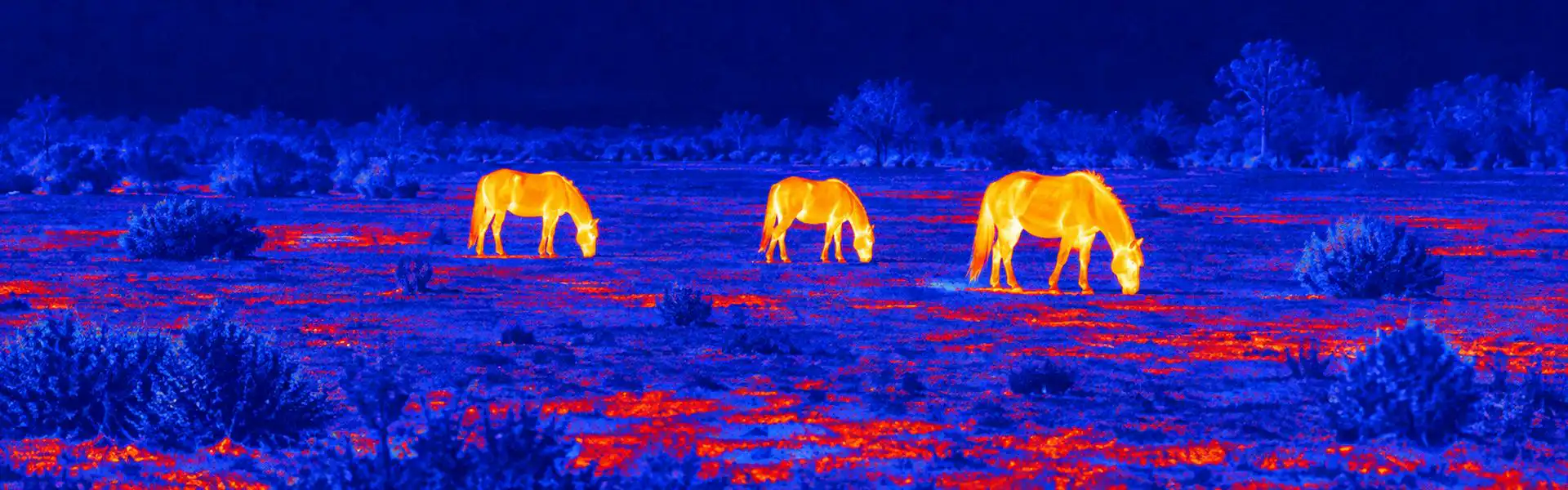
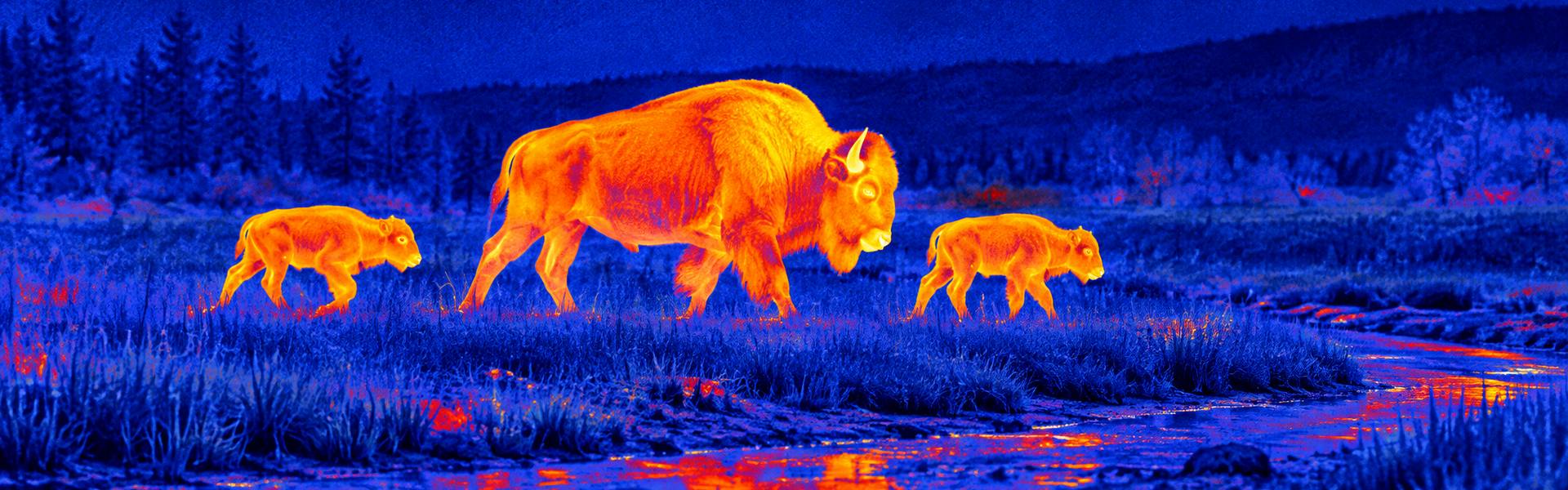
Thermal night vision binoculars can help an observer locate exposed livestock and nearby wildlife, but enclosure walls, vegetation and animal overlap remain real limits. Native thermal detail matters only when enough of the subject is visible. Keep original thermal and visible records separate and avoid treating a heat outline as a health or security conclusion.
Thermal Night Vision Binoculars Need an Exposed Enclosure View
Staff watching activity around an enclosure should map the visible openings before comparing devices. Mesh, roofing and solid walls can conceal different parts of the animals. farm binocular observation priorities should include target size, grouping and the positions from which animals are actually exposed.
Use rural observation features and limitations to distinguish locating an animal from recognizing a small visitor nearby. The thermal infrared imaging principle does not imply a view through solid pen walls. Thermal observation is supplementary: it does not diagnose livestock health, establish an intruder’s intent or guarantee that every animal has been accounted for.
Read Native Detail Against the Body Area You Can See
A high-resolution array cannot supply the legs or head hidden by an obstacle. Detector samples describe the available image; enhanced output, display pixels and file dimensions describe other stages. separating binocular resolution specifications is essential when the digital and thermal channels have very different quoted numbers.
Compare questions about usable thermal detail with original clips showing animals at your normal distances. A display shape or image mapping may crop part of the available view. The field-coverage and focal-length tradeoff explains why more target sampling can come at the expense of a wider enclosure view. Judge the detail relevant to the task rather than screen sharpness alone.
Test Thermal and Visible Evidence on the Same Animal
Use separate clips of the same exposed subject, with the mode and conditions identified. thermal and digital channel comparison reveals what each view contributes. A visible image may show features absent from the thermal outline; a thermal view may first draw attention to activity in darkness.
Review discovery followed by visible confirmation without assuming every multispectral product stores both channels simultaneously. Overlay alignment is not a repair for a damaged detector. Nearby foreground objects and different optical paths can complicate a blended image. Keep the original channel examples so a polished composite does not become the only evidence used to justify the purchase.
| Question |
What to examine |
Decision |
| Enclosure view |
Walls, openings and animal overlap |
Map what cannot be seen |
| Native detail |
Original detector view at task distance |
Separate screen and file specifications |
| Two channels |
Same subject in separate recordings |
Retain independent evidence |
| Fixed position |
Full kit, eye fit and duration |
Compare comfort before optional functions |
Make the Fixed Observation Position Comfortable
An approved support, harness or appropriate seat can reduce sustained handling effort. two-eye thermal observation comfort still requires individual eyepiece spacing and diopter setup. Try the device for the expected viewing duration rather than only long enough to see the menu.
Consider outdoor binocular fit and accessories as a complete kit. A rangefinder may be useful for labeling a location, but it can add cost and power demand without improving detector detail. If an observer consistently develops discomfort, stop and reassess. A bigger housing, dual eyepieces or a nominally lighter product cannot establish universal comfort for a team.
Distinguish Channel Faults From Ordinary Handling Effects
A dirty proximity area, wrong mode or unsuitable focus can create confusing screen behavior. Strong light in a digital channel can also change its appearance independently of the thermal view. practical binocular controls for new users should be demonstrated before a problem is attributed to the sensor.
Use questions to resolve before ordering to establish support for the exact configuration. If a rangefinder fails, the thermal channel might remain available, but that architecture must not be promised without documentation. Record whether the fault appears in one eyepiece, both eyepieces or the exported file. This is more useful evidence for service than a vague statement that the image looks wrong.
Define the Purchase Around an Honest Record
Write down the required sightline, animal size, observation duration and recording method. Confirm power, file export and supplied accessories. If one device lacks a rangefinder, compare its whole useful package rather than assuming the more complex binocular automatically has better image performance.
Review thermal optics selection fundamentals and the thermal optics collection against these needs. Request original footage and exact native specifications, while leaving missing certification or calibration information unconfirmed. The purchase should make exposed observations more repeatable. It should not turn enclosure gaps, uncertain silhouettes or partial counts into unsupported claims about complete monitoring.
Use a mapped sightline and representative animal clips to judge the equipment. Keep channels and resolution fields separate, try the whole stationary setup and retain uncertainty whenever animals overlap or remain partly concealed.