Thermal Night Vision for a Fast, Small Subject
A backyard observer may notice activity at dusk but struggle to retain a useful view. Define the visible exit area and watch from an appropriate fixed position without disturbing the animals. thermal observation across an outdoor scene should retain the opening and surrounding landmarks rather than immediately zoom into a tiny silhouette.
Your question may be whether activity occurred, not which species appeared. matching thermal detail to an observation question keeps that goal clear. Several overlapping or rapidly changing shapes may be difficult to count. A thermal recording can document visible activity while leaving both numbers and identity uncertain.
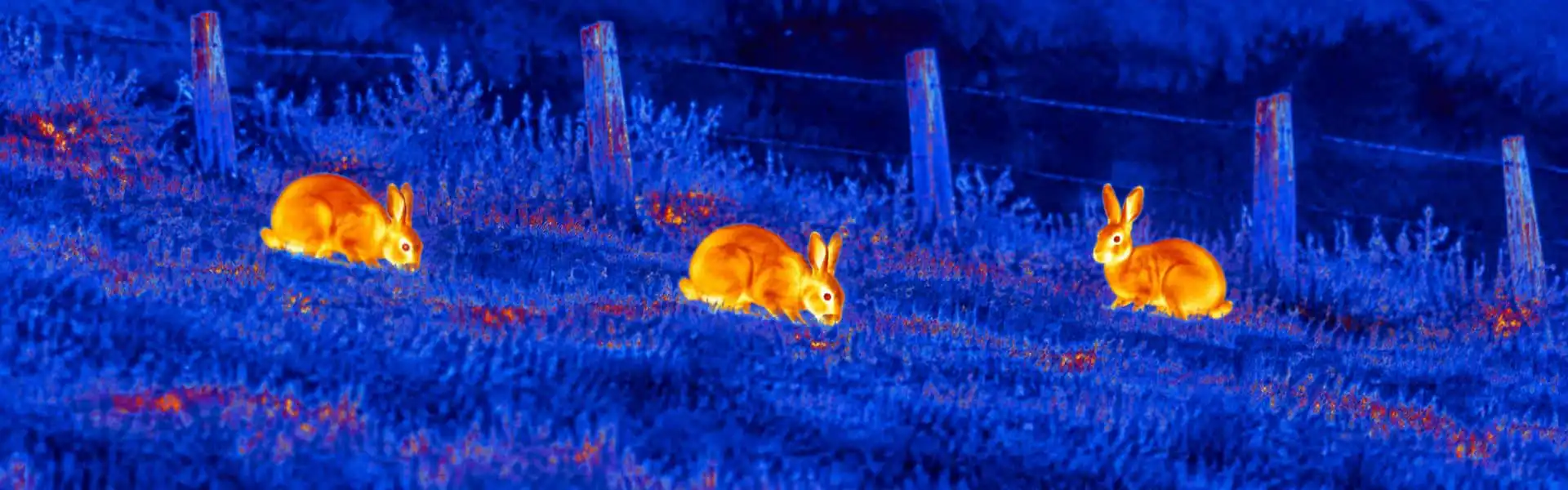
Thermal night vision can support observation of exposed bat-emergence activity, but a fast small target may supply too little detail for reliable counting or species identification. Start with a stable wide view of the visible opening, check original recordings and note conditions. Do not disturb the roost or treat processing claims as proof of recognition.
Frame Rate Does Not Describe the Entire Motion Experience
The sensor, processing, display and recording pipeline all influence what you see. More frames can help continuity but do not establish negligible live delay or provide missing spatial detail. refresh and live-view response considerations is relevant even when using a handheld or supported viewer rather than goggles.
Compare thermal system motion questions using an original sample with the mode identified. A faster processor can make menus or display behavior better without making a tiny target recognizable. Do not turn a smooth edited clip into an unsupported claim that the system can identify every moving animal.
Keep Enough Scene Coverage to Retain Context
The detector and lens combination determines how much of the scene remains visible at baseline. A long focal length can enlarge the subject but narrow the search area. focal length and field-of-view geometry explains the tradeoff. Record the actual coverage at your fixed location.
Use portable thermal wildlife scanning only when the stable hold suits the task. thermal lens and native-array choices should separate detector samples from digital enlargement. At higher magnification, small hand movements become larger and a fast subject is easier to lose. An approved support may improve repeatability where the viewer allows it.
| Question |
What to examine |
Decision |
| Visible exit activity |
Stable native frame with landmarks |
Document activity without promising species |
| Fast small silhouettes |
Original motion sample and target sampling |
Separate continuity from recognizable detail |
| Variable background |
Time, weather and surface context |
Do not infer measured temperature |
| Repeated sessions |
Supported power, recording and low disturbance |
Keep conditions and evidence comparable |
Background and Weather Belong in the Clip Notes
Infrared viewing and reflected-light viewing provide different information, as explained by NASA’s infrared reference. Warm roofs, reflective surfaces and low contrast can complicate a silhouette near an exit. Droplets on a lens can also degrade the image, while weather may independently affect the scene.
Check thermal observation beside buildings and vegetation for a practical viewpoint. budget scanner field-evaluation checks should include less favorable conditions as well as a striking demonstration. Keep native resolution, enhanced output, display and export dimensions separate; NETD is not a temperature-accuracy specification.
Record What You Observed, Not What You Hoped to Prove
Retain the original file and identify its channel, approximate time and viewing position. Describe which activity was exposed and whether animals overlapped. A center inset may enlarge existing data while preserving the wide scene, if the mode is supported. It is not a second detector or automatic identification function.
The complementary approach in thermal discovery with visible context can clarify surroundings when light permits. longer two-eye wildlife observation may suit sustained stationary watching. Neither configuration removes the need to acknowledge incomplete records or uncertainty about similarly shaped animals.
Choose a Repeatable Low-Disturbance Workflow
Before an important observation, practice focus, file stopping and export on a familiar scene. Confirm supported storage and power needs with recording active. If specifications conflict, obtain the exact variant facts instead of combining the largest values. Avoid approaching the roost or testing a system in a way that disturbs wildlife.
Use thermal optics sourcing fundamentals to document the hardware and conditions. Review the thermal optics family according to usable coverage and original recorded evidence. A dependable activity record with honest limits is more valuable than a technically ambitious claim unsupported by the actual small-target footage.
Treat the session as observation of exposed activity, with a stable frame and a preserved original record. Keep counting and identification uncertainty explicit. Choose equipment by demonstrated coverage and motion behavior, and protect the animals from unnecessary disturbance.