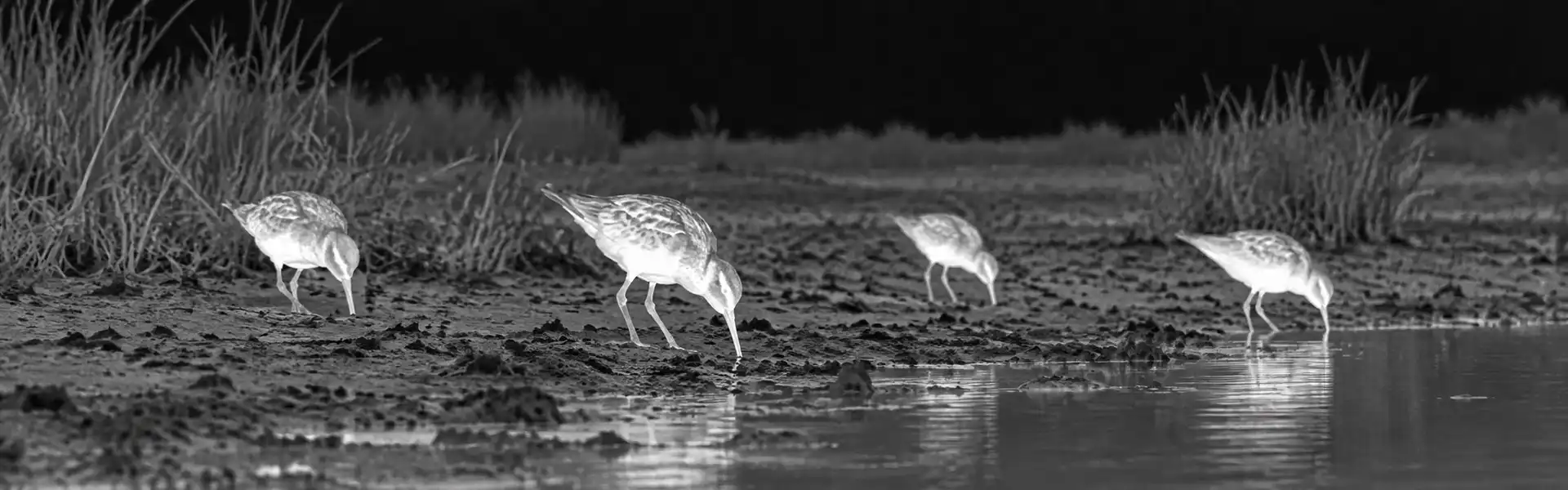
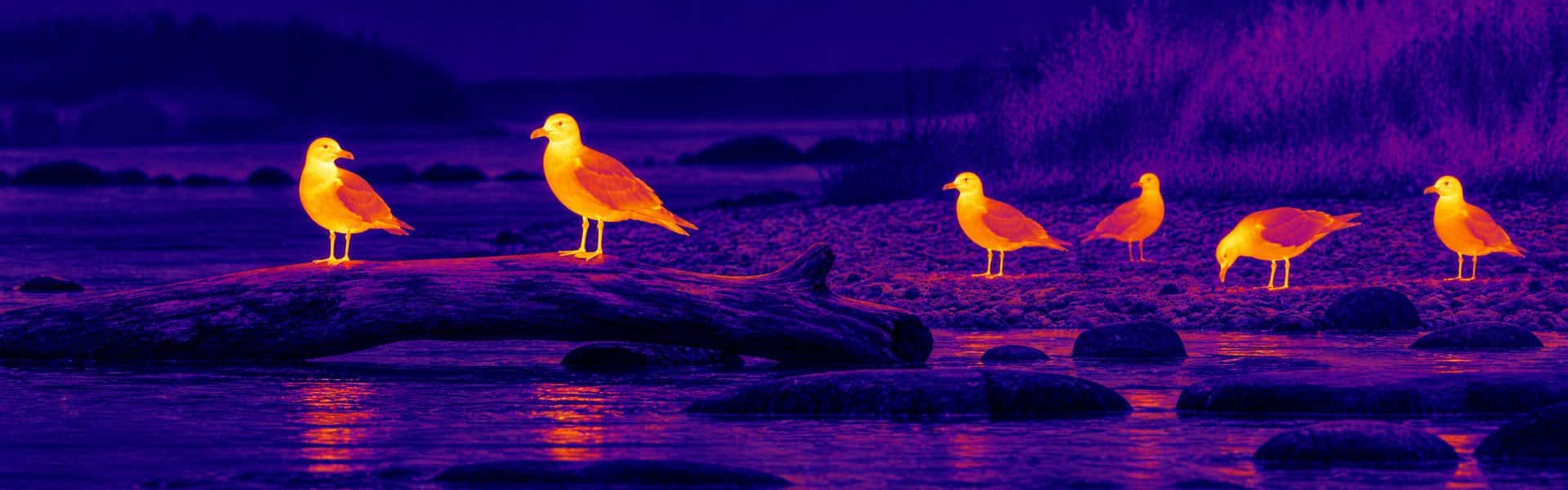
Thermal monoculars can help locate an exposed bird, but useful native detail, suitable focus and field coverage matter more than maximum digital zoom. For species confirmation, retain visible photographs or other distinguishing evidence. The illustrations here provide scene context, not measured performance or temperature data from a tested product.
Thermal Monoculars Locate the Bird; They May Not Name It
A wildlife video creator can use thermal discovery to decide where to point a visible camera. A warm patch in a canopy may establish a likely location without showing plumage or a diagnostic outline. monocular wildlife discovery should therefore be one stage of a broader evidence workflow.
Choose a legitimate fixed position and avoid approaching a resting bird just to fill more pixels. thermal animal-identification boundaries applies particularly to tiny or partly concealed subjects. The opening illustration depicts a general observation scene; it cannot be used to infer detector resolution, a measured temperature or the performance of a particular unit.
Native Sampling Matters Before Enlargement
A bird covering very few detector elements may remain an indistinct shape after digital zoom. Enhancement and output dimensions can change presentation without providing missing anatomical detail. native sensor and lens comparison should use exact unit specifications, keeping display pixels and recorded file sizes separate.
the infrared basis of thermal imaging explains why thermal and visible photographs reveal different information. Compare entry-level thermal detail expectations with an exposed small subject rather than a large warm wall. An older higher-resolution unit may provide more samples, but condition, controls and lens suitability remain part of the decision.
| Question |
What to examine |
Decision |
| Bird in broad canopy |
Coverage and an exposed line of sight |
Locate before attempting identification |
| Bird near feeder |
Minimum focus and native sampling |
Test the real close distance |
| Small distant outline |
Lens and native sensor combination |
Do not rely on maximum digital zoom |
| Later species review |
Original thermal clip plus visible evidence |
Keep unresolved identity explicit |
Coverage and Close Focus Change the Search
A wide view can find more canopy at once, while a narrower lens may provide more target scale at a distance. Neither is universally better. focal length and field-of-view tradeoffs provides geometric context. Minimum focus distance is a separate requirement for nearby feeder observations.
Use first-monocular focus and framing checks at the actual feeder and tree distance. thermal viewing at farm-edge vegetation also illustrates the importance of clear gaps. A close bird that cannot be focused or a distant bird hidden behind leaves is not resolved by a larger recording canvas.
Use the Illustration as a Prompt for a Real Trial
From the chosen viewpoint, compare an exposed subject at native view and record the conditions. Repeat on a low-contrast day if possible, as well as a clearer cold evening. Keep the distance and focus procedure consistent. A dramatic false-color illustration is not evidence of a measured contrast advantage.
Include practical budget scanner evaluation with your actual gloves and carrying arrangement. thermal optics evidence and ownership checks should request original files rather than a compressed phone preview. Record whether a cover, droplets or a dirty objective changed the scene, using only the supported cleaning procedure.
The Thermal Lens and Rangefinder Have Different Jobs
If the viewer includes a laser rangefinder, check the separate window and supported conditions. Fog can prevent a useful return even while some thermal contrast remains. Distance helps interpret scale and maintain consistent notes; it does not create additional detector samples or identify the bird.
Use questions about integrated thermal features to avoid assuming both optical paths share every limitation. Thermal recording in outdoor conditions should preserve the original and any uncertainty. A clear heat patch with a missing laser reading is a more precise observation than saying the entire device stopped working.
Complete the Record With Visible Evidence
Transfer the discovered position to a camera or ordinary binoculars when conditions permit. Preserve the visible evidence separately from the thermal clip and label both. If species features are missing, leave the identification open. A replay can clarify existing contours but cannot restore details that were never recorded.
Consider combining thermal discovery and visible detail when designing the kit. two-eye observation for longer bird sessions may improve personal comfort, but not the certainty of every silhouette. Review thermal optics choices around the scene you actually photograph, the smallest exposed subject and the practical recording routine.
Use thermal discovery to guide a careful optical confirmation, not to replace it. Choose the sensor-and-lens combination that fits your bird scene, retain original evidence and label illustrative media honestly. The best workflow can still leave a concealed or unresolved bird unidentified.