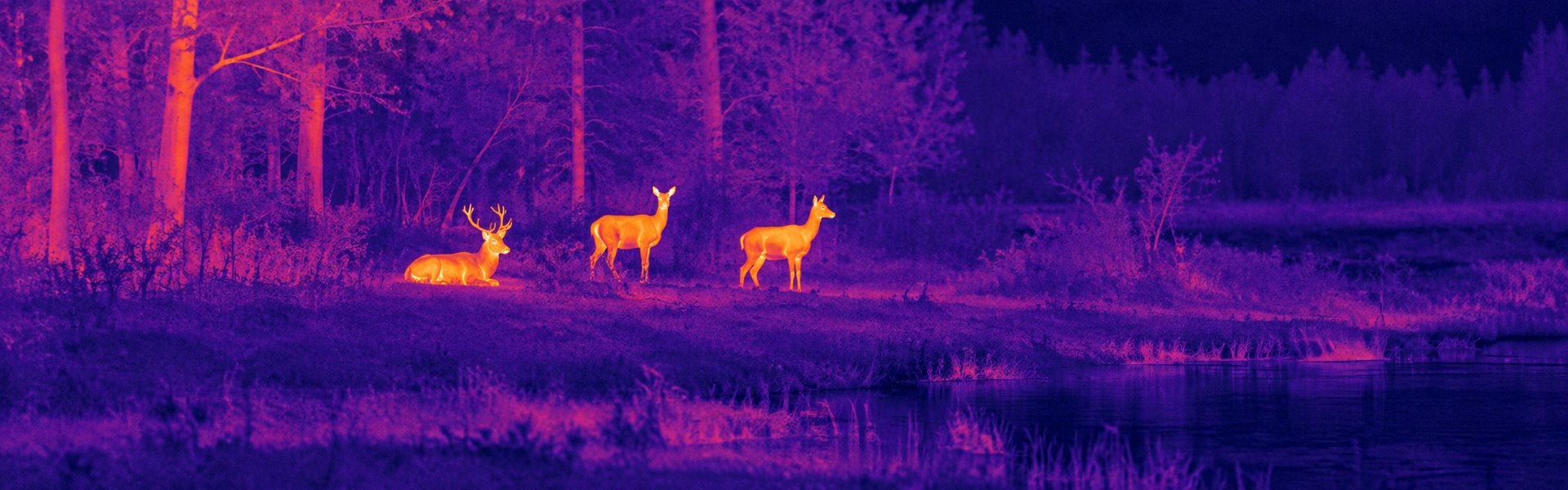
Thermal goggles hunting observers use at woodland edges should be judged by the information visible through the gap, not by the brightness of the glimpse. Keep a sighting when the outline supports the stated observation; label it uncertain when branches, movement or limited native samples leave important features missing. This reference concerns wildlife observation only.
Thermal Goggles Hunting Observers Use Need a Clear Evidence Threshold
Imagine a ranger observing the same wooded opening twice. The first glimpse is a bright fragment behind twigs; the second contains a continuous body outline crossing the gap. Both may deserve a note, but they do not support the same conclusion. The approach in task-led thermal observation selection helps establish what information is necessary before a device is chosen.
Write the intended observation as a sentence: an exposed animal crossed the opening, a body moved toward the field, or a recognizable feature was visible. Do not let a species name enter that sentence until its evidence is present. thermal discovery followed by ordinary confirmation remains relevant, but the first decision is whether this particular fragment is useful at all. This is documentation of nature activity, not a weapon-related workflow.
Use Native Detail to Decide What the Fragment Can Support
The detector samples only the image available to its optics. An enlarged fragment can occupy a large display while containing very little original information. native thermal specification fundamentals distinguish the detector array from enhanced output, screen pixels and exported dimensions. A sharp interface cannot establish a detailed animal outline.
The optical relationship between resolvable detail and contrast also matters: nearby shapes can merge even when a specification lists many pixels. Compare separate channel resolution fields using an unedited clip of a subject at the intended gap. Ask whether the needed body boundary remains visible without strong sharpening. Keep screen beauty separate from the question of which detail can actually be defended in the record.
Treat the Occluded Portion as Missing Information
A branch is not made transparent by choosing a brighter palette. Body angle, leaves and the outline of the gap can remove the exact feature needed for identification. open-ground and woodland-edge thermal limits should be understood before a partial glimpse is given a confident label.
The thermal infrared signal reaching the viewer is not an X-ray image of the concealed animal. A gap can reveal movement without revealing an entire body. Consider questions about useful thermal range in terms of the visible feature rather than a single distance. If two animals overlap, retain that possibility in the note. Recording uncertainty is not failed observation; it is a more faithful description of what the equipment and viewpoint allowed.
| Observation |
Evidence to keep |
Interpretation |
| Bright fragment |
Visible area and interruption by branches |
Discovery-level note only |
| Continuous outline |
Original sequence through the gap |
Describe movement without guessing identity |
| Distinct feature |
Adequate native detail and confirmation |
State only the feature actually resolved |
| Clipped display |
Eye position versus saved image |
Investigate fit separately from scene quality |
Separate a Cropped View From Poor Scene Focus
A missing edge of the display may result from eye position, while a blurred animal may result from objective focus or inadequate scene detail. These are different failures to investigate. compact thermal viewer positioning checks are useful when the body outline appears incomplete only while the system is worn.
Try the supported arrangement while stationary and compare the view with a saved original if available. motion response and correction behavior can help explain why a short sequence differs from a still. Do not assume the detector is damaged merely because the eyepiece view is awkward. A support that fits but cannot provide a full comfortable frame may be the wrong arrangement for judging brief wildlife glimpses.
Keep a Short Record That Shows Why the Sighting Was Retained
A useful entry identifies the opening, observation direction, available body area and whether the animal remained exposed. Save the original clip before enlarging a copy. Use separate labels for observed movement, possible animal type and confirmed visible detail. This makes later review more intelligible than a file named with an assumed species.
Review evidence to request before buying thermal goggles against this retention rule. mixed-channel viewing alternatives may add appearance detail without making every uncertain frame conclusive. If the needed feature never enters the gap, leave the record at discovery level rather than changing equipment settings repeatedly until the fragment looks persuasive.
Choose a Viewer That Makes This Decision Repeatable
An equipment trial should reproduce the normal gap, viewing distance and short exposure time. Compare comfortable stationary fit, accessible focus and the ability to save an original fragment. A device with a convenient interface can make evidence handling easier even when its advertised maximum range is smaller.
Use whole-system comfort and value considerations and the thermal optics collection with the observation threshold written down. Keep unknown calibration, detector-supplier and software facts unconfirmed. Choose the arrangement that preserves useful information without encouraging unwarranted certainty. A better viewer supports the ranger’s judgment; it does not remove vegetation or manufacture a feature that was never visible.
Decide what a sighting must contain before naming it. Compare original fragments at the real gap and choose a comfortable supported system that preserves them. Keep discovery, uncertain interpretation and confirmed detail as separate levels in the record.