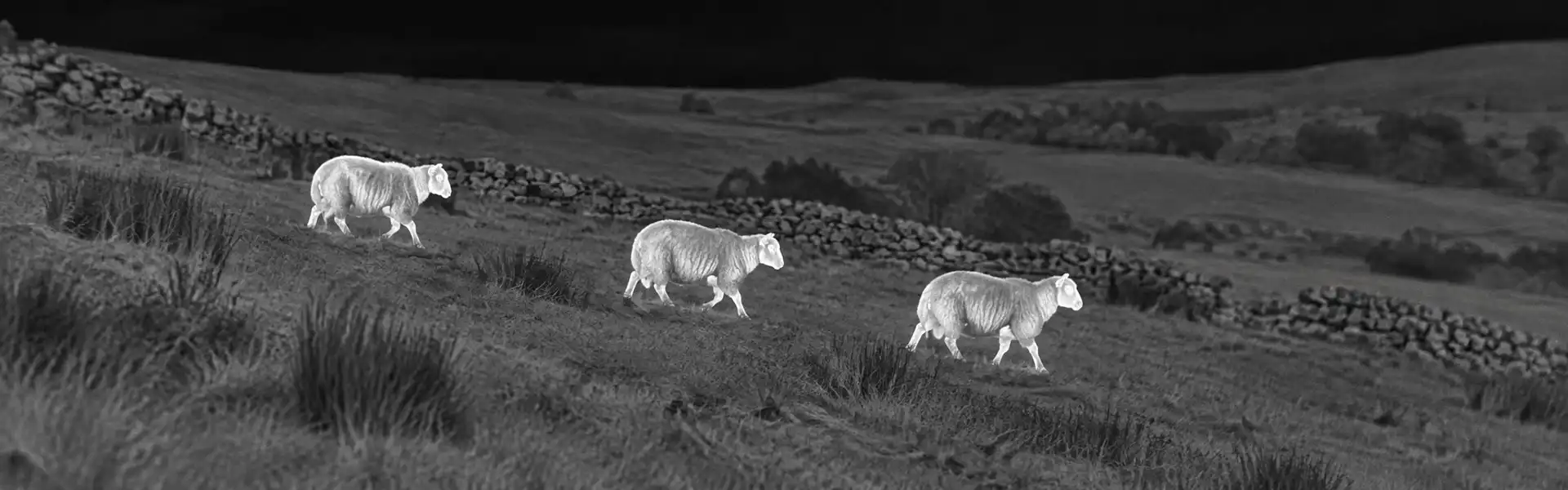
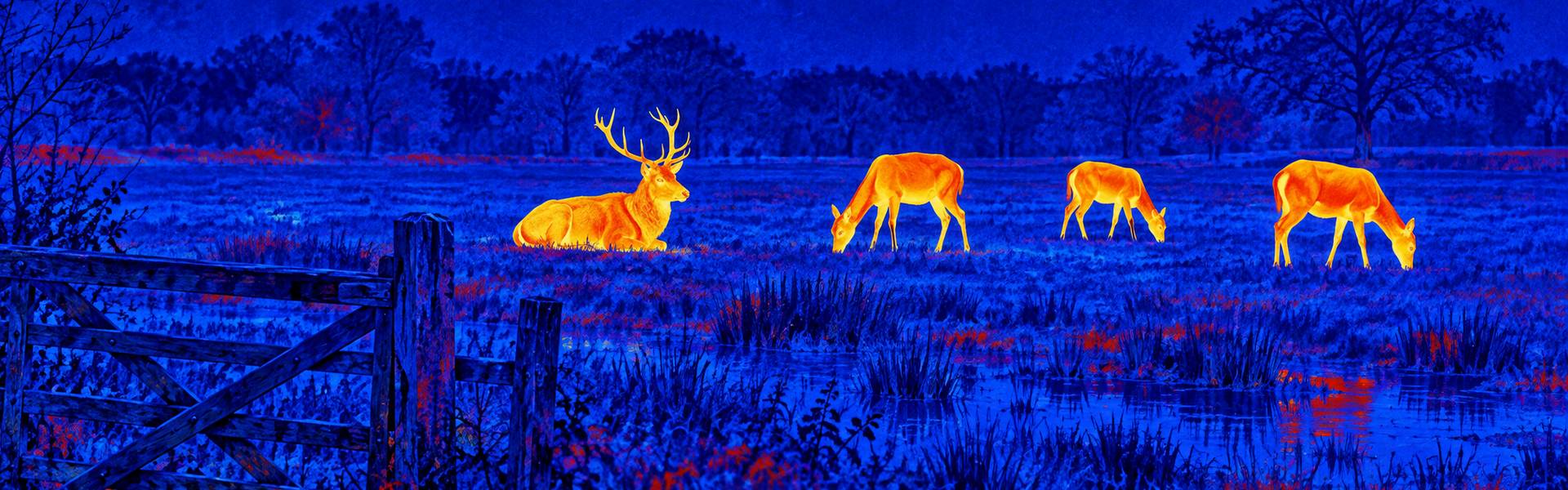
Thermal goggles for hunting can be evaluated for stationary open-field wildlife observation. Establish the useful body detail at your distance, then test supported eye positioning, motion response and recording. This guide covers observation only. A thermal detection range is not an identification guarantee, and a wearable-looking housing does not prove a complete supported system.
Thermal Goggles for Hunting Need an Observation-Only Range Question
An outdoor enthusiast may want to notice exposed animals across an open field. Define whether a distant outline is enough or whether the record requires recognizable features. thermal observation across open ground is a more useful starting point than the largest distance in a listing.
Use task-led thermal viewer buying criteria to write the subject size, position and necessary detail. The thermal infrared imaging principle explains heat-contrast discovery in darkness, not certain identification. This article is limited to stationary nature observation and documentation. It does not describe weapon use, and an unidentified thermal silhouette must not be treated as a confirmed species or individual.
Compare Coverage With the Field You Actually Watch
A tight lens can enlarge a distant subject but omit much of the surrounding field. the focal-length and field-of-view tradeoff helps explain why a larger displayed target is not the only requirement. Compare the nearest opening and the far boundary from the same position.
Review compact thermal viewer field choices and questions about useful thermal range. Digital zoom does not add original samples, and a detector specification does not recover concealed features. Start wide enough to reacquire an animal after it moves. A small warm point can be useful activity evidence while remaining inadequate for a more specific identification statement.
Confirm the Whole Support, Not Just a Rail on the Viewer
A rail or adapter point is only part of a complete supported arrangement. Verify the specified interfaces, adjustments and how the device can be positioned over the intended eye. checks before choosing a worn viewing system should include the full support and approved power configuration.
Use whole-system fit and value considerations with normal clothing and eyewear. Moving from bare headwear to thicker padding can change fit. A lightweight viewer placed far forward can still feel tiring because balance matters as well as mass. Do not add unsupported parts or assume an adjustment range from photographs. Stop and reassess if stationary viewing becomes uncomfortable.
| Question |
What to examine |
Decision |
| Field task |
Subject size and required body detail |
Separate detection from identification |
| Support |
Documented interfaces and full adjustments |
Do not infer readiness from a rail |
| Stable view |
Movement, controls and processing |
Describe artifacts before assigning a cause |
| Repeat use |
Refit, power and original export |
Prefer supported complete-kit behavior |
Test Stability Before Blaming Image Processing
A vibration, a loose permitted adjustment or a shifting support can affect the apparent image independently of processing. thermal motion and display checks should include a stationary view and a controlled gentle pan using the actual arrangement.
Compare mixed thermal and night-viewing comfort if two technologies are being combined. Brightness balance and image scale can matter more than changing palette. Two separate thermal viewers also add weight, alignment and independent correction behavior without necessarily doubling useful information. A recording alone may not reveal whether an artifact came from movement or processing; note the conditions during the demonstration.
Keep Each Recorded View and Its Settings Identifiable
An open-field clip should state which channel and palette were used and whether the image was enlarged. separate channel recording specifications keep native thermal resolution distinct from screen pixels and digital video dimensions. Confirm the file-export method before relying on wireless sharing.
Use discovery with later visible confirmation when recognizable features are available through another suitable view. Large output dimensions or an attractive color treatment do not establish measured temperature, detector sensitivity or calibration. Unknown app, firmware and recording behavior should remain unconfirmed. Preserve the original record before trimming a copy, particularly when the thermal observation is inconclusive.
Choose an Approved Kit You Can Refit Consistently
Ask whether the support preserves the viewing position after removal, which retention arrangement is recommended and which battery accessories are supported. Refit the kit during the demonstration rather than judging only its first careful adjustment. Unsupported extensions can affect operation and coverage terms.
Review complete thermal viewing kit priorities alongside the thermal optics product family. Buy against a written field-observation method and unresolved questions. A straightforward supported setup with interpretable original footage is more useful than several uncertain accessories. Keep ordinary vision and responsible observation available; the device is not a complete substitute for environmental judgment or visibility.
Define the animal detail you need and test the supported arrangement from a realistic stationary position. Keep original channel records and uncertainty intact. Useful coverage, stable fit and clear documentation are more defensible purchase criteria than maximum range or wearable appearance.