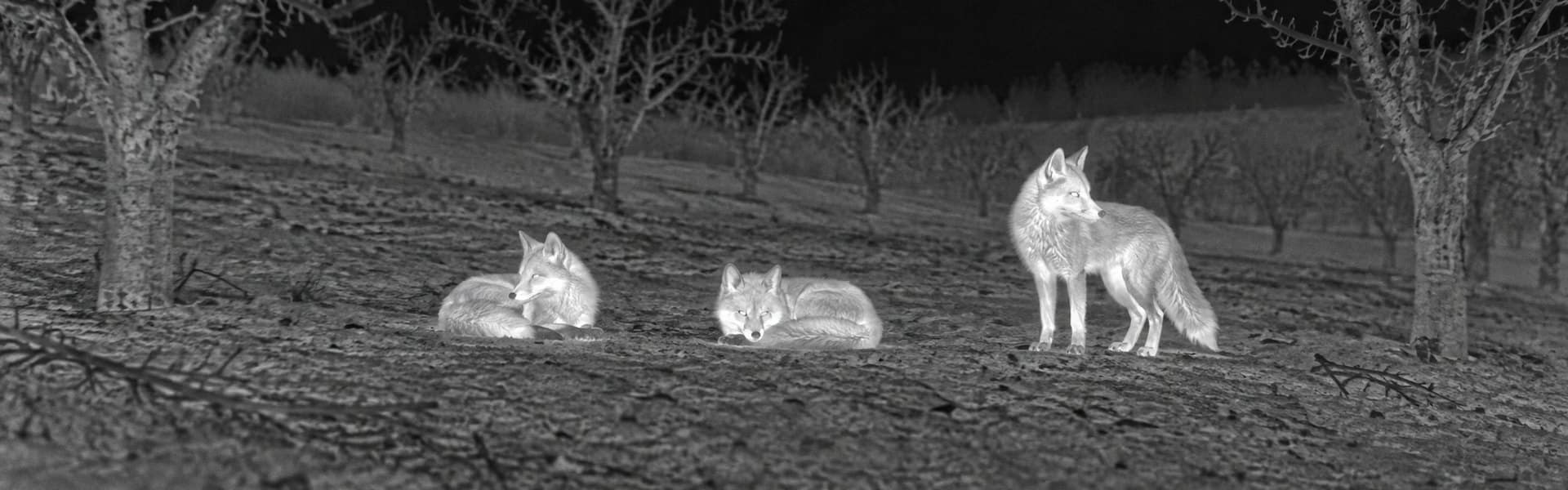
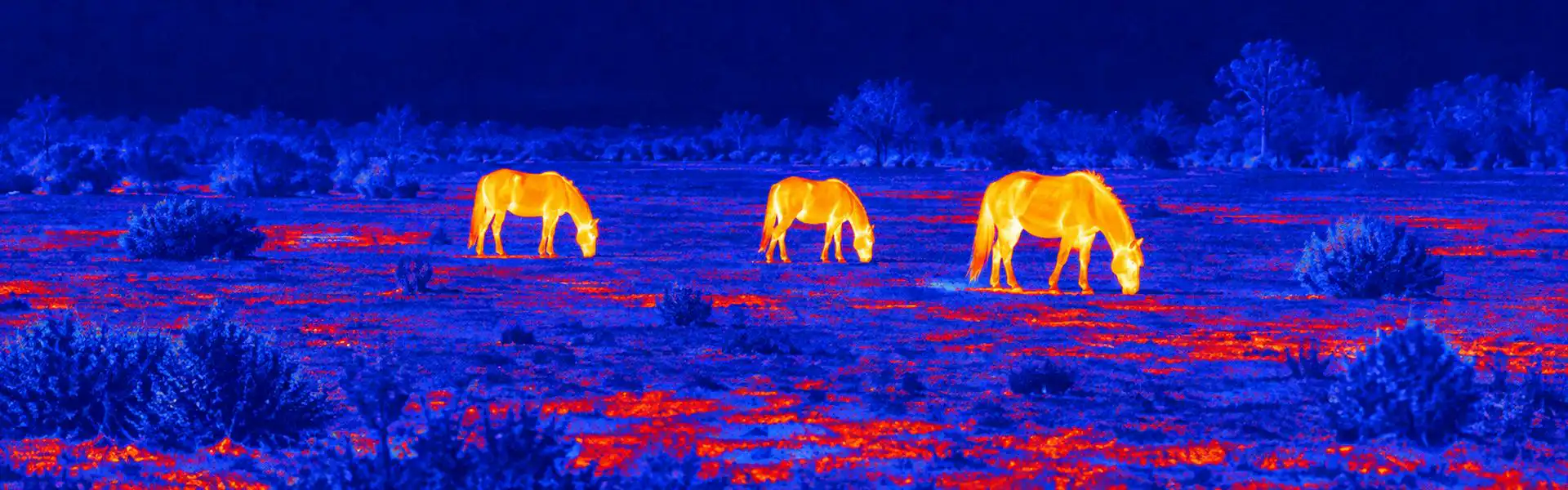
Night vision and thermal binoculars for a backyard should be selected for nearby animals, garden width and comfortable repeated viewing. A maximum-range claim may be irrelevant when the subject is close to shrubs or a fence. Thermal discovery and visible identification remain separate tasks, and each channel needs its own focus and recording check.
Night Vision and Thermal Binoculars Should Fit the Garden
A rural property owner watching a garden has a close, cluttered scene: shrubs, fencing, a shed and animals that may emerge briefly. binocular priorities for rural property owners should begin with the closest useful distance and the width of the visible space.
Compare matching thermal equipment to a specific task before selecting a long-lens package designed around distant targets. The field-of-view relationship to focal length explains why narrower framing can be inconvenient nearby. A viewer that detects a distant warm object may still be awkward for an animal just beyond the garden fence. Near focus and rapid reframing deserve an actual demonstration.
Do Not Transfer a Focus Setting Between Channels
The thermal and digital channels may have different optical paths and focus behavior. One image can look clear while the other remains blurred. multispectral channel specifications need to be read separately, including their native resolution and lens coverage.
Use common dual-channel binocular buying mistakes to avoid judging thermal performance through a sharp daytime picture. The reflected versus emitted infrared principle explains why the views can show different details. A digital night image may become monochrome depending on its mode. That does not imply the thermal channel lost color information: thermal palettes are display mappings rather than the animal’s visible colors.
Compare a Small Animal With the Real Background
A larger animal in the same view may dominate contrast or obscure a smaller one. Vegetation can hide part of a body, and the heat stored in a structure can complicate interpretation. thermal contrast in outdoor scenes is not constant across an evening or throughout one garden.
Ask for evidence of useful animal detail at a representative distance and viewing angle. An exposed outline is a different achievement from recognizable species features. Digital zoom enlarges the sampled area but does not recover concealed legs or a hidden head. Keep sightings uncertain where only a partial silhouette can be seen rather than naming an animal because its location seems plausible.
| Question |
What to examine |
Decision |
| Close animal |
Demonstrated minimum focus |
Avoid a distant-target lens by default |
| Garden width |
Base view with real fencing and shrubs |
Retain context during reframing |
| Two channels |
Separate focus and original files |
Do not transfer specifications |
| Family use |
Proximity behavior and eyepiece adjustments |
Test the handover routine |
Make Screen Behavior Part of the Handling Trial
Some binoculars use proximity sensing to control the display. Glasses, eye position or contamination around the sensor can affect how conveniently that works. comfortable binocular viewing checks should include lifting the device, moving it slightly away and bringing it back.
Compare beginner-friendly binocular controls if the equipment will be shared by family members. Each person may need eyepiece and diopter adjustments. Test these ordinary movements before deciding an unexpected blank screen is a detector failure. If behavior persists outside documented settings, record a clear description for support. A smooth handover matters more than a long list of modes nobody can find quickly.
Ask What Happens to the Original Recording
A saved clip may not preserve both channels independently, and a battery change can interrupt a file. outdoor binocular recording needs should include stopping a clip, confirming it saved and exporting it through the documented route.
Review thermal discovery with a visible confirmation record when a second channel provides the detail needed to interpret the sighting. Remote mode switching through an app must be confirmed for the exact device and software, not inferred from wireless connectivity. Keep local recording useful even when no phone is available. A screenshot of a stream may not preserve the original detail or metadata.
Choose the Useful Package Instead of Maximum Range
For a garden, practical lens coverage, minimum focus and repeatable controls may justify the purchase better than a rangefinder or an exceptional marketing distance. If ranging is useful, steady support can improve aiming repeatability, but the readout still needs a clear target and appropriate conditions.
Use purchase questions that reveal missing details alongside the thermal optics product collection. Confirm included power, service and the actual channel specifications before ordering. No reviewed ranking or current price is assumed here. The best fit is the arrangement that produces a comfortable and interpretable backyard record from the position where you normally watch.
Start with your garden’s actual width and nearest animal positions. Compare focus, original files and comfortable handling before optional range features. A modest, well-matched system can be more useful than a distant-target specification that does not suit the backyard.