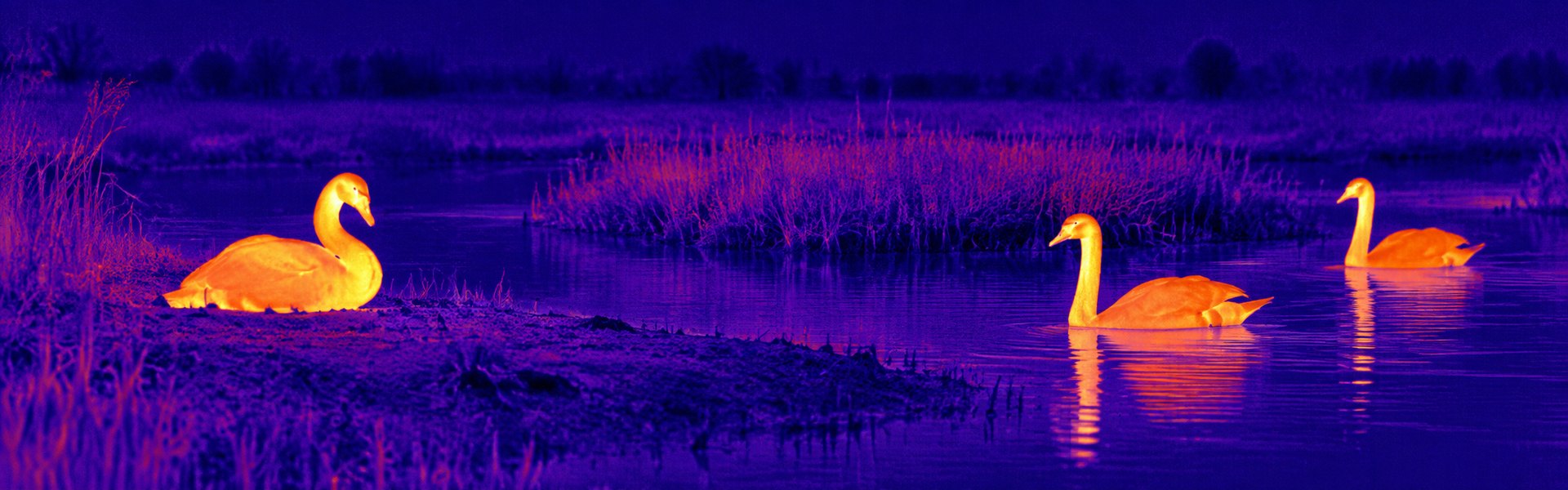
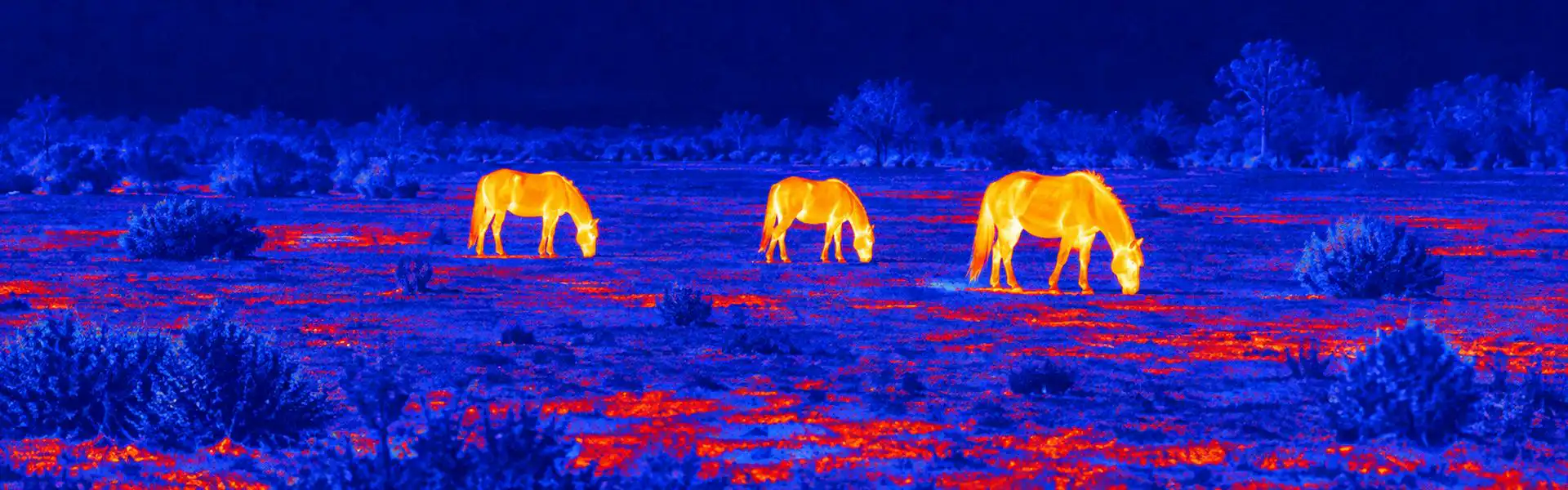
Night vision and thermal goggles provide different views of a waterside scene. Thermal can highlight exposed contrast; digital night viewing can show reflected-light detail when its illumination is adequate. Neither reliably identifies a distant animal from a small bright patch. Evaluate the system while stationary and keep ordinary visibility available.
Night Vision and Thermal Goggles Do Not See the Same Scene
A camper observing a pond or dockside bank may see a clear animal outline in one channel and an ambiguous patch in the other. This is not necessarily a defect. comparing night-viewing and thermal channels begins with the different signals they receive, not with an assumption that one image is always superior.
The reflected and emitted infrared distinction is useful background. The thermal image responds to available radiation, while digital viewing may depend on reflected illumination. combined-channel observation choices should preserve these differences in the specifications and recording. A bright digital image is not proof of fine thermal detail, and a prominent thermal shape may lack recognizable visible features.
Keep the Observation Position Stationary and Permitted
Use a stable, permitted viewing place, away from any task that requires normal vision. outdoor thermal field conditions include water, reeds, distant banks and exposed animals, each of which can produce a different-looking background. The equipment is for observation, not for deciding where to step or how to travel.
Start with checks before wearing a thermal viewing system, including whether it is actually designed and supported for that form of use. A mounting interface alone does not establish comfort or suitability. Test the available view while stationary, retain ordinary awareness and stop if the image or setup causes discomfort rather than trying to force both channels to merge.
Judge a Distant Target by Its Outline, Not Its Brightness
A warm spot on the far bank may be easy to notice yet too small to identify. Partial concealment, background temperature and target angle matter. thermal discovery followed by wildlife confirmation is a better sequence than enlarging a spot until it looks convincing.
Compare questions about useful thermal range with the actual body size and the features needed for a reliable record. The relationship between lens coverage and focal length explains why a distant target can occupy more of a tighter frame without guaranteeing a species judgment. Water reflections and a wet surface can further complicate the context around an apparent target.
Wet Lenses and Side Light Deserve Their Own Test
Droplets on a small thermal objective can obscure a large portion of the useful view. A weather-rated housing does not prevent this image problem. compact thermal viewing tradeoffs should include accessible lens care, protection during transport and the exact conditions required for covers to stay closed.
Eyecups and brightness settings may help with stray light and comfort, but adjustments can also restrict the visible image. goggle display and motion checks include clear framing from your real eye position. Do not assume that apparent blurring comes from the sensor before checking eyepiece focus, alignment and an obviously wet or obstructed lens.
| Question |
What to examine |
Decision |
| Bank silhouette |
Body outline and available context |
Separate discovery from identification |
| Two channels |
Thermal versus reflected-light evidence |
Confirm recording behavior |
| Wet objective |
Droplets and approved cleaning |
Do not equate housing rating with visibility |
| Viewing duration |
Whole-system fit and strain |
Try a stationary alternative if needed |
Compare Comfort Over the Whole Observation Session
A combined setup may be acceptable for brief checks but tiring for prolonged watching. Weight located in front of the face and unequal image brightness can matter even when each device works properly. thermal goggle cost and comfort tradeoffs should be tested as a complete arrangement, not as separate specifications.
Consider two-eye binocular viewing alternatives if a stationary waterside watch is the primary task. A handheld or supported binocular can solve a different comfort problem without claiming an advantage for every observer. Ask to try realistic clothing and eyewear. Persistent strain is a reason to stop and reassess, not a test of how determined the user is.
Buy a Documented System Rather Than a Collection of Parts
Confirm the exact viewer, permitted support, power arrangement and file-export method. If two views are shown in the promotional material, ask whether they come from electronic fusion, a recording inset or two separately operated devices. These arrangements have different handling and evidence value.
Review budget considerations for a complete viewing kit and the thermal optics category without inventing compatibility between parts. The useful purchase is one you can position, operate and put away consistently. Its thermal channel may assist with exposed wildlife discovery; it does not reveal animals behind dense reeds or turn a colorful waterside image into a measured temperature record.
Choose for clear channel documentation and comfortable stationary use. Treat water, vegetation and target size as real limits, and keep the wildlife record uncertain when the available outline is insufficient. An impressive image is not a complete interpretation.