Thermal Night Vision selection notes for long range heat detection and camping users.
What thermal night vision means for open field scanning
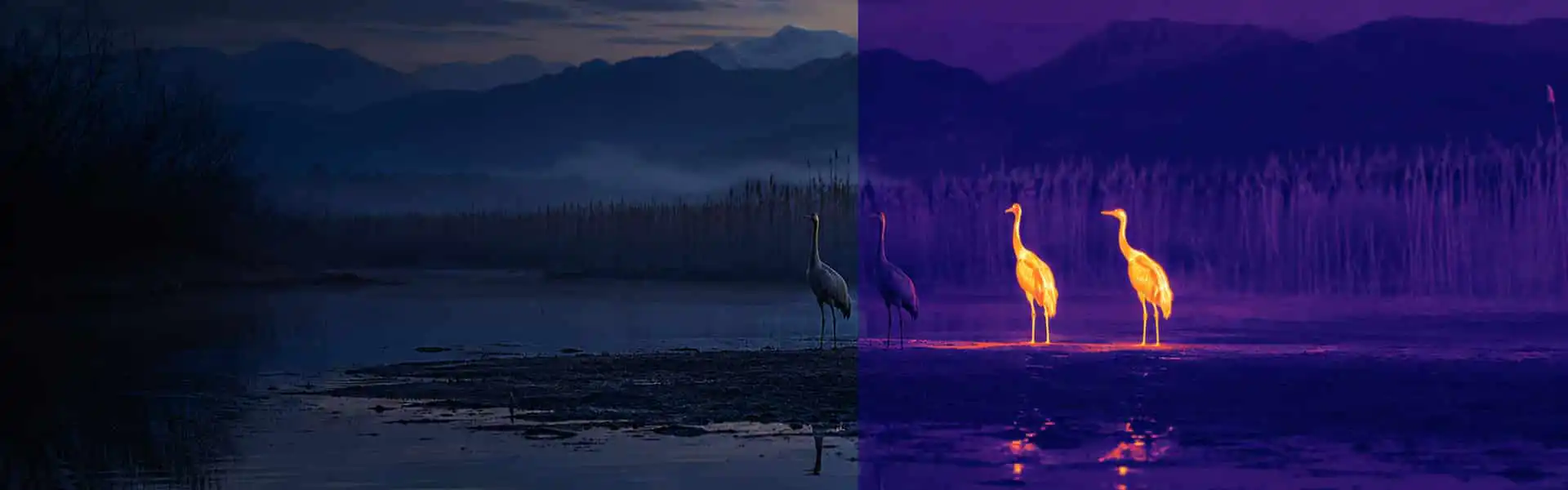
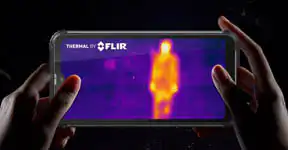
Thermal night vision should be understood as thermal imaging used in dark or low-visibility observation conditions, not as ordinary digital night vision. Thermal devices detect heat contrast, while digital night vision relies on visible or near-infrared light. For open field scanning, the buyer should separate thermal channel details, digital night channel details, display behavior, image palettes, and recording formats.
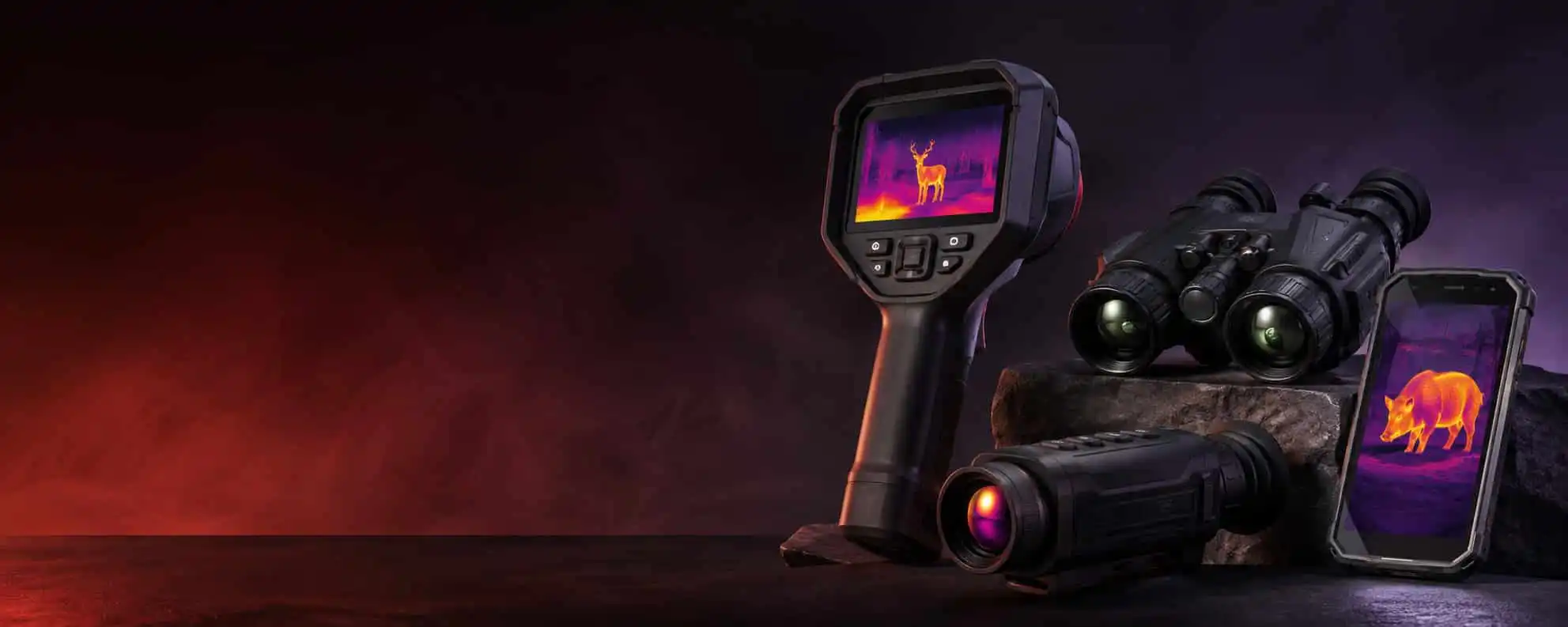
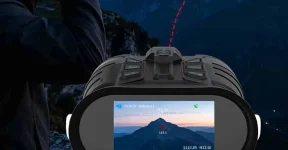
This guide is written for camping users comparing multispectral thermal optics or thermal binocular-style devices for long range heat detection. The key feature angle is image palettes, because palettes can make a scene easier to interpret when background temperature, vegetation, and distance change.
Short direct answer for thermal night vision buyers
Thermal night vision can help with open field scanning when the user needs to locate heat contrast beyond what visible light can show. It is strongest as a detection and awareness tool. It should not be presented as a guarantee of identification, exact distance performance, critical safety decisions, or hazardous operations.
Buyer scenario: camping users checking open areas
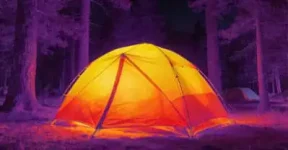
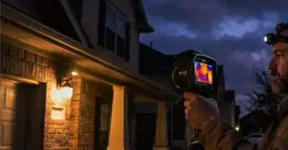
Camping users may want to check a trail edge, field opening, shoreline, storage area, or campsite perimeter without relying on bright visible light. A thermal device can show warm subjects against cooler backgrounds, but results change with weather, surface temperature, target size, and line of sight.
For this reason, detection distance is not a single universal promise. A large warm subject in a clear field may be detected farther than a small subject partly covered by vegetation. Recognition and identification require more detail than simple detection, so buyers should compare real sample footage rather than only headline range wording.
Image palettes and practical interpretation
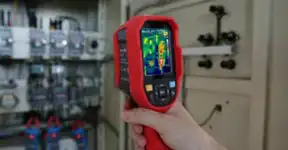
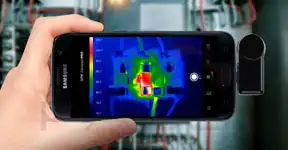
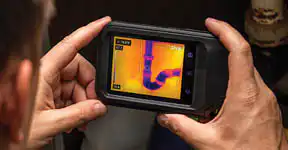
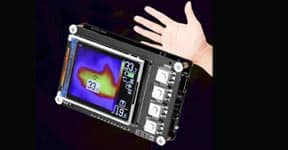
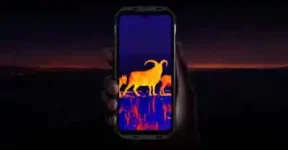
Image palettes change how heat differences are mapped into visible colors or grayscale. White-hot, black-hot, red-hot, iron, or rainbow-style palettes can make different backgrounds easier to interpret. A useful palette for one scene may be tiring or confusing in another, so quick palette switching and clear display brightness control can matter in the field.
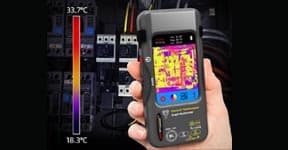
Keep thermal palettes separate from native thermal resolution, enhanced output, display pixels, photo/video dimensions, measurement range, accuracy, NETD, and calibration status. Palette choice changes interpretation; it does not create additional detector detail or verified temperature accuracy by itself.
Selection matrix
Buying question
What to check
Practical outcome
Is it true thermal imaging?
Thermal channel specs separate from digital night vision
Prevents confusion between heat imaging and light amplification.
Will palettes help in open fields?
Palette options and quick switching
Makes changing backgrounds easier to interpret.
Is distance wording realistic?
Sample clips, lens data, target size, and conditions
Separates detection from recognition and identification.
Can it be carried with camping gear?
Weight, strap, battery, startup time, and storage case
Determines whether the device will actually be used.
Does recording matter?
Which channel records and at what file size
Avoids mixing thermal detail with display or video claims.
Are measurements claimed?
Temperature range, accuracy, NETD, and calibration status
Keeps qualitative viewing separate from measurement promises.
Use case guidance
For open field scanning, start with the widest safe area, move the viewer slowly, and compare heat signatures against terrain features. If the device has visible or digital night channels, use those channels for context after the thermal channel finds a point of interest. If the device has range or compass functions, verify the exact supported modes on the product page before writing them into procurement requirements.
FAQ
Are thermal binoculars practical for quick scans while carrying other camera equipment?
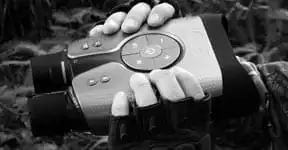
They can be practical when the binocular form gives a steadier two-eye viewing posture and fast access. The tradeoff is bulk. Camera users should compare neck strap comfort, startup time, battery handling, and whether the thermal view helps decide where to point the visible camera next.
Why do the screens switch off when I move the binoculars slightly away from my eyes?
Some binocular-style viewers use proximity or power-saving behavior, but this is model-specific. Verify whether the product has an eye sensor, screen timeout, standby mode, or manual brightness setting before assuming the behavior is a defect.
Why does the digital night image become monochrome while daytime viewing is in color?
Digital night channels often switch to monochrome when infrared illumination or low-light processing is active. Thermal imaging is different: it displays heat contrast through palettes. Keep digital night color, thermal palettes, and visible daylight channels separate in the specs.
Will the focus setting for a daytime bird still suit the thermal view at the same distance?
Not always. Visible and thermal channels can have separate focus behavior, lens paths, and depth of field. If a multispectral device is being considered, verify whether each channel needs separate focus and whether the focus controls are easy to repeat.
Can a tripod make long-distance binocular ranging more repeatable?
A tripod or stable support can make repeated viewing and ranging more consistent, especially with high magnification or narrow field of view. It does not improve the detector itself, but it can reduce hand movement and make comparisons easier.
Sourcing advice
When comparing thermal night vision devices, ask the supplier to separate thermal detector resolution, display resolution, visible/digital channel specifications, recorded file size, palette options, battery runtime conditions, IP rating if claimed, software support, and calibration status. Do not assume that a multispectral label means every channel has the same resolution, focus behavior, or recording format.