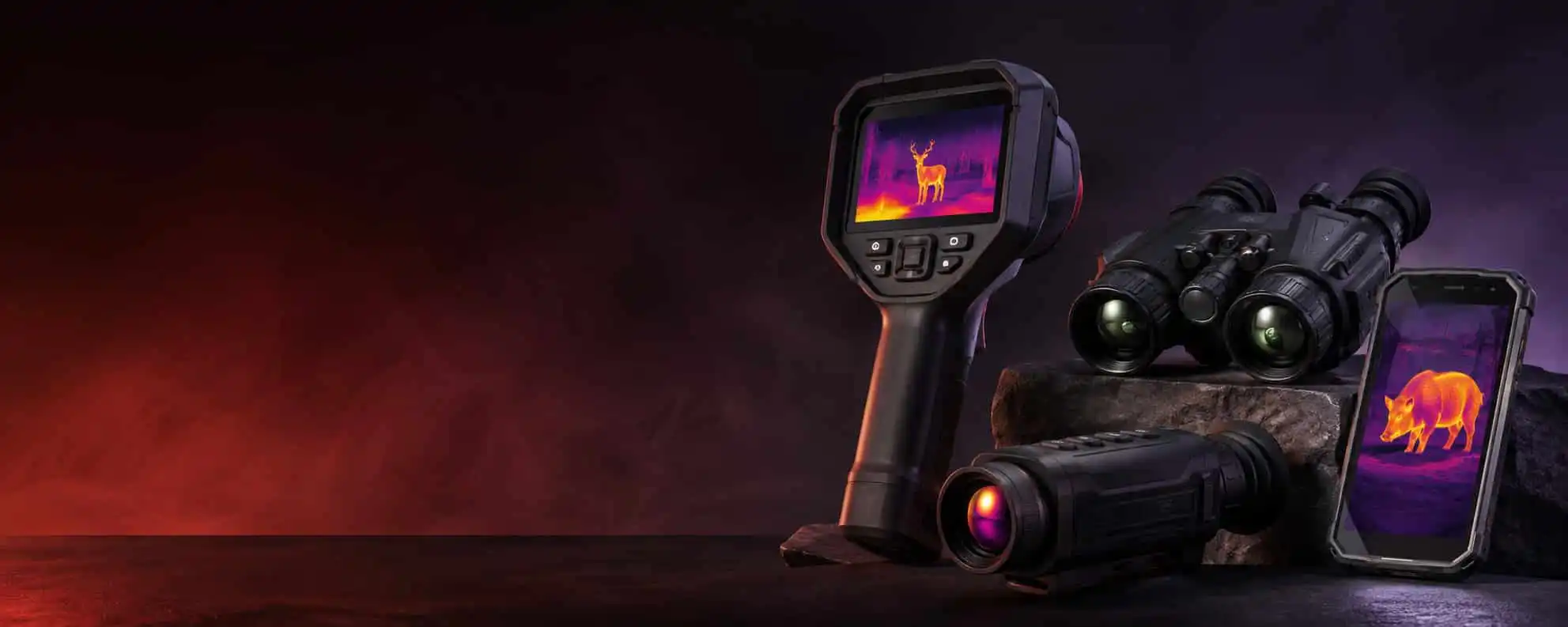
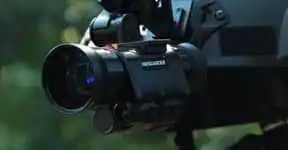
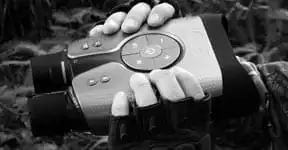
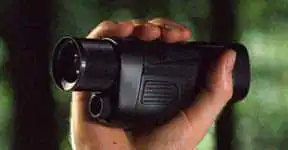
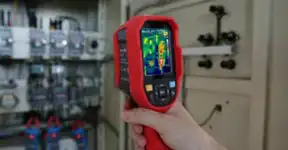
Thermal Binoculars selection notes for farm and ranch checks and farm owners.
Buyer scenario for thermal binoculars on farms
Farm owners usually need repeatable scanning, not just a dramatic long-range claim. Thermal binoculars can help check open fields, livestock areas, fence lines, outbuildings, and rural property edges from a safe position when visible detail is limited.
The core buying problem is choosing useful range without overpaying. For that reason, this selection checklist focuses on native thermal resolution, comfort, viewing layout, recording, and the limits that still need to be verified before purchase.
Short answer for thermal binoculars
Thermal binoculars are worth considering when two-eye viewing, a steadier observation posture, or an integrated multispectral workflow matters more than carrying the smallest possible device. They are not automatically better than a monocular, and binocular-style viewing does not prove that the product has two independent thermal sensors.
What native thermal resolution means
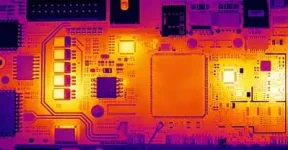
Native thermal resolution is the detector’s actual thermal sampling grid, such as 256 by 192, 384 by 288, or a 640-class array. It should be listed separately from display resolution, app preview size, photo size, video recording size, and any enhanced or upscaled output.
For farm and ranch checks, native thermal resolution helps decide whether a warm target remains useful after zoom, distance, and weather reduce detail. It does not replace lens choice. A wider lens can cover more ground faster; a tighter lens can make distant targets larger but may feel slower for close scanning.
Feature checklist
Feature
Ask the seller
Practical buying note
Native thermal resolution
What is the detector resolution, not just display or video size?
Use it to compare real thermal detail.
Viewing structure
Is it dual eyepiece, shared screen, or multispectral?
Two-eye shape does not prove dual thermal sensors.
Lens and field of view
What are the focal length and horizontal/vertical field of view?
Match open-field range with close-area scanning comfort.
Focus and eye fit
What are the diopter and interpupillary adjustment ranges?
Long checks are harder if eye position is uncomfortable.
Recording and sharing
Which channel is saved when recording?
Thermal and visible channels should not be merged in the specs.
Rangefinder, if included
Which viewing modes support the range overlay?
Ranging is separate from thermal recognition.
Supplier evaluation before buying
A useful supplier answer should give native thermal resolution, lens details, field of view, battery runtime conditions, sample images or clips, IP rating, warranty terms, and what happens when the product needs service. If a listing uses broad phrases such as 4K, HD, or long range, ask whether those claims describe the thermal detector, the screen, the digital channel, or the saved file.
For procurement, compare the total field kit rather than the device alone. Carrying case, approved batteries, chargers, straps, replacement eyecups, app support, and service turnaround can matter more to a farm owner than one extra marketing specification.
FAQ
Are two-eye thermal viewers the same as ordinary optical binoculars with thermal capability added?
Not necessarily. Some thermal binoculars use one thermal sensor and route the image to a binocular-style display, while multispectral designs may keep thermal, visible, and ranging channels separate. The listing should state the actual channel layout.
Can a wide interpupillary distance prevent me from seeing a single comfortable thermal image?
It can. Binocular comfort depends on interpupillary adjustment, eyecup shape, diopter range, screen layout, and how long the buyer expects to observe. Fit and eye comfort matter as much as headline range claims for repeated farm checks.
Can the digital view be used as the inset while thermal remains the main view?
Only if the specific binocular supports that mode. Multispectral products should list which channel is primary, which channel can be inset, and whether recording saves the thermal image, the digital image, or both.
How should I compare multispectral binoculars with a separate thermal spotter and daylight binocular?
Compare the actual workflow: how fast you can find heat, confirm visual context, record, range, and carry the equipment. One integrated device can reduce gear changes, while separate devices may offer more specialized optics.
Can I use the rangefinder in both digital and thermal viewing modes?
That depends on the product design. A rangefinder is a separate measurement channel, so buyers should verify the supported viewing modes, the display overlay, the minimum and maximum usable range, and whether weather or reflective surfaces affect readings.
Sourcing advice for farm owners
Choose thermal binoculars around the areas you actually check: field width, common observation distance, animal size, viewing duration, and whether a second visible channel is useful. If the product page does not separate native thermal resolution, display pixels, recording size, measurement ability, calibration, and software support, keep those items on the verification list before purchase.
Compare thermal goggles for open field scanning, buyer fit, refresh rate and motion smoothness, practical limits, and sourcing checks for rural property buyers.
Compare thermal monocular hunting for night nature recording, buyer fit, recording and wireless sharing, practical limits, and sourcing checks for nature...