Thermal Goggles Hunting Users Compare Need a Defined Target
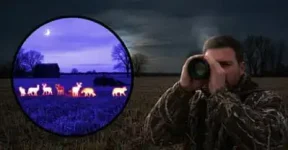
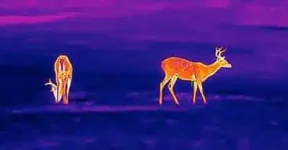
A range figure can describe noticing a warm patch under favorable conditions without describing a usable animal outline. A small exposed body beside vegetation presents a different problem from a large upright subject against an uncomplicated background. Asking whether a viewer reaches a certain distance is incomplete unless the target, conditions and required outcome are specified.
Begin with open-field thermal viewing priorities and woodland-edge observation limits. Write down whether the task is noticing activity, following direction or confirming a visible feature. Do not combine those outcomes in one tick box. A tiny intermittent patch can support a cautious activity note while remaining insufficient for species identification or a reliable count.
Thermal goggles hunting observers use cannot transfer a human-sized detection claim directly to a small animal. The animal occupies a different angle in the scene and may provide far fewer useful thermal samples. Define the exposed feature you need to recognize, then request evidence at a comparable distance. This is an observation guide, not a promise of locating or identifying every animal.
Work With the Angle Occupied by the Exposed Feature
At greater distance, the same exposed feature covers a smaller angle. Lens coverage and the native detector array determine how the scene is sampled; enlarging the displayed image later does not add captured scene information. field coverage and optical geometry provides the general relationship, not a performance certificate for an unnamed viewer.
Use native versus displayed specification distinctions and thermal discovery before optical confirmation to keep the comparison honest. A larger animal partly hidden behind a trunk may offer less usable information than a smaller fully exposed animal nearby. Record the exposed portion, not just the animal’s nominal size. Do not supply an exact recognition distance by applying a simplistic multiplier to somebody else’s human-detection claim.
| Check | What to record | Decision |
|---|
| Headline range | Target dimensions, contrast, weather and the meaning of detection in the seller evidence | Do not treat a human-target claim as a small-animal identification distance. |
| Exposed feature | The part actually visible rather than the complete body behind cover | Judge whether that feature occupies enough original scene samples. |
| Original sample | Distance, native view, zoom state and an unedited surrounding scene | Keep noncomparable demonstrations out of the main purchase comparison. |
| Field conclusion | Activity, outline or confirmed feature, with confidence and obstruction recorded separately | Report only the level supported by the observation. |
Ask for a Sample That Can Actually Answer the Question
Request original footage with the approximate target distance, native viewing mode, digital zoom state and environmental conditions disclosed. A demonstration should show enough surrounding scene to judge what is visible. thermal motion evidence matters when the target crosses the frame, but smooth playback does not establish fine anatomical detail.
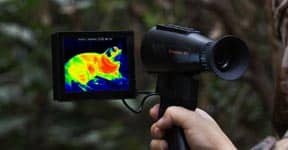
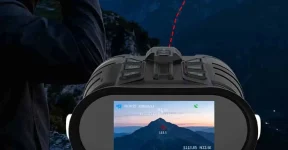
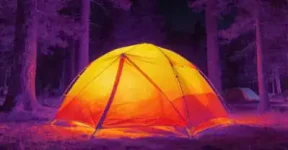
Compare goggle specification priorities and combined viewing channel questions without confusing visible-light markings with thermal contrast. The infrared imaging principle explains why warm surface patterns are not a natural-color photograph. If the seller’s sample concerns a different-sized subject or radically different weather, mark the evidence as noncomparable. A colorful promotional crop should not silently become the basis of a small-animal range recommendation.
For example, write the requirement as following the direction of an exposed small animal across one visible gap. Keep identifying its species as a separate, stronger requirement. A demonstration that meets the first statement should not automatically pass the second. This simple separation prevents a successful detection sample from being promoted into an unsupported recognition claim.
Turn Uncertainty Into a Practical Viewing Limit
For a guided group, agree what the observer may reasonably report at the chosen station. An unexplained patch remains an unexplained patch until another observation supports a stronger interpretation. A permitted closer viewpoint or ordinary optical confirmation can be more informative than repeatedly enlarging the same sparse image.
Read bird discovery and optical confirmation, questions about usable detail, open-ground scanning boundaries and goggle value beyond feature counts before deciding. Keep weather, occlusion and observer confidence in the notes. Do not position people or disturb animals solely to manufacture a range demonstration. Select adequate evidence for the ordinary task and leave the product’s unverified detection, recognition and identification distances explicitly unresolved.
Define the feature and the reporting standard first. A useful demonstration matches that task instead of borrowing credibility from an unrelated large-target range claim.